

By CATHERINE RIUNGU
The Senegal opportunity has an equally interesting — and rather unexpected — connection to Kenya’s flower industry. During the International Flower Trade Expo (IFTEX) in Nairobi in June, a visitor from Senegal attending the exhibition told HortiNews that Senegal imports flowers from Kenya
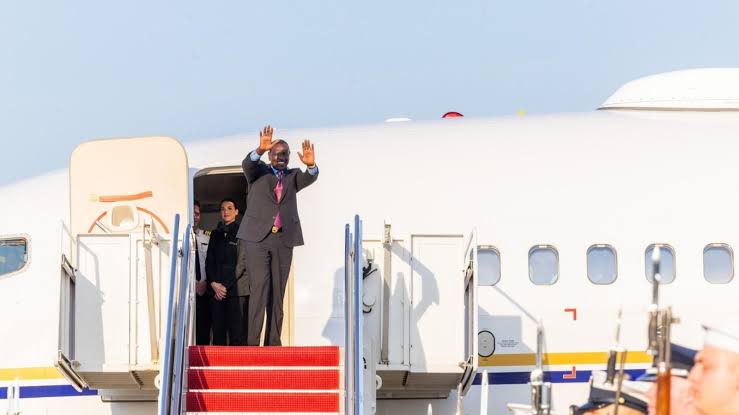
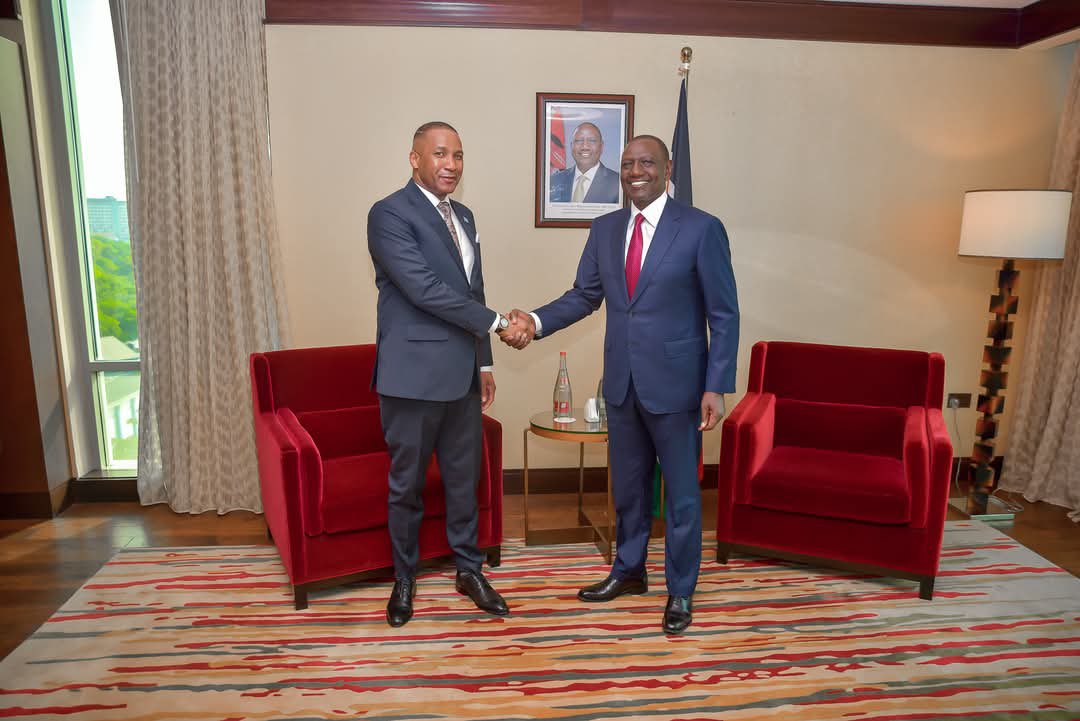
When President William Ruto travels to Botswana and Senegal next month, the two State Visits should be watched for more than the diplomatic photographs, formal agreements and business delegations.
For Kenya’s agriculture and horticulture sectors, the more important question is what the country is taking to these markets — and what opportunities Kenyan businesses can bring home.
The President is scheduled to undertake a State Visit to Botswana on October 23–24, followed by Senegal from October 29–31. High-Level Business Roundtables are proposed for October 24 in Botswana and October 30 in Senegal, bringing Kenyan businesses together with investors, government representatives and private-sector counterparts.
Agriculture features prominently on both agendas, but the opportunities are distinctly different. In Botswana, the focus includes livestock and agriculture alongside mining, tourism, real estate, trade and investment. In Senegal, the agriculture agenda specifically includes tea, coffee and horticulture, alongside dairy and milk products, tourism, banking and financial services, infrastructure, trade and investment, and oil and gas.
For Kenya’s livestock sector, Botswana presents an especially interesting opportunity because the relationship between the two countries already includes an exchange of agricultural knowledge.
During a 2024 visit to Kenya, former Botswana President Mokgweetsi Masisi visited the Kenya Animal Genetic Resources Centre, where he was taken through semen production, preservation and processing and discussed opportunities for cooperation in animal husbandry, dairy and beef production. Areas identified for cooperation included breed improvement, feed and fodder and animal disease management.
The relationship is not one-way. Kenya has also looked to Botswana’s experience in livestock identification and traceability, areas increasingly important for disease control, livestock management and access to export markets.
That makes the Botswana engagement more than an opportunity for Kenya to seek investment or sell livestock products. It creates room for Kenya to position its livestock expertise, technology and services in a fellow African market.
There is another, less visible, dimension to that expertise: the people Kenya has trained.
I was reminded of this during an animal-health conference I attended in Gaborone, organised by the World Organisation for Animal Health. In conversations with veterinary professionals from across Africa, the University of Nairobi’s Faculty of Veterinary Medicine came up repeatedly when the subject of professional training arose.
It was a striking reminder that Kenya’s contribution to Africa’s livestock sector is not only in the animals, genetics, technologies or systems it can export. It is also in the people it has trained.
The University of Nairobi’s veterinary faculty has for decades been an important centre for veterinary education, research and professional training, with programmes and research spanning animal health, production, disease surveillance and other areas relevant to the livestock sector. That human capital is itself an African export — one that does not appear in customs statistics.

The commercial opportunity therefore goes beyond the sale of animals. It includes genetics, breeding material, animal health services, feed technologies, equipment, advisory services, digital traceability systems, processing technologies and investment across the livestock value chain.
In other words, Africa is not simply a source of agricultural imports or a destination for Kenyan commodities. It is also a market for Kenyan agricultural expertise and technology.
The Senegal opportunity has an equally interesting — and rather unexpected — connection to Kenya’s flower industry. During the International Flower Trade Expo (IFTEX) in Nairobi in June, a visitor from Senegal attending the exhibition told HortiNews that Senegal imports flowers from Kenya.
He offered another detail that was perhaps even more revealing: Senegal has a small greenhouse flower industry, and some of the technical personnel working in those greenhouses are Kenyans.
The observation provides a glimpse into a relationship that is larger than the movement of flowers from one country to another. Kenya’s horticultural footprint in Senegal also includes the skills, technical knowledge and experience developed by its growers and specialists over decades.
Trade data provide some confirmation of the flower connection. Kenya exported 21,391 kg of fresh cut flowers and buds to Senegal in 2024, valued at about US$107,310. The volumes are modest compared with Kenya’s traditional flower markets, but they establish something important: the trade already exists.

The question now is whether the presidential visit can help move such connections from isolated commercial transactions into a broader business relationship. For Kenya’s flower industry, Senegal could be more than an end market. It could provide an entry point into the wider West African region, particularly as demand for flowers, horticultural products, production technology and technical expertise develops.
This is where the significance of IFTEX becomes particularly clear. The Senegalese visitor was not simply looking at flowers in Nairobi. He was participating in an exhibition that brings together growers, breeders, exporters, suppliers, investors and other players from across the global flower industry. In the process, he was able to share insights about what is happening in his own market — information that may not appear in conventional trade statistics.
That is precisely the kind of connection Kenya needs to deepen if its agricultural businesses are to look beyond traditional markets. And Senegal’s opportunity extends beyond flowers.
The proposed business agenda specifically identifies tea, coffee and horticulture. Kenya already has globally recognised strengths in all three. Tea and coffee are established export commodities, while horticulture brings with it an entire ecosystem of production technology, logistics, cold chain, certification, packaging, finance, breeding and market development.
There is therefore an opportunity to think about Senegal not merely as a destination for Kenyan products, but as a potential commercial gateway into a much larger West African market.
The same thinking applies to Botswana. Kenya’s livestock sector does not have to approach Botswana only as a market for animals or meat. It can look at the wider value chain — from genetics and breeding to animal health, feed, technology, traceability and processing.
That is where the proposed business roundtables become important. A presidential visit can open doors that individual companies may struggle to open on their own. But the commercial value will ultimately depend on what businesses do with those openings — whether they identify buyers, distributors, investors and local partners, and whether government addresses the practical issues that determine whether trade can actually happen.
For horticulture, these include market intelligence, phytosanitary requirements, logistics, cold-chain infrastructure, payment systems and reliable air and sea connections. For livestock, they include animal health protocols, traceability, breeding standards, genetics, feed, certification, meat processing and access to finance.
There is also a bigger African story here. Kenya has traditionally looked outward to Europe, the Middle East and Asia when discussing agricultural exports. Those markets remain essential. But the continent itself is increasingly becoming part of the opportunity.
The evidence from Botswana and Senegal suggests that Kenya already has something to offer. In Botswana, it is expertise and technology in a livestock sector looking for productivity, genetics, animal health and stronger value chains. It is also the human capital represented by Kenyan veterinary professionals who are already part of Africa’s animal-health ecosystem. In Senegal, it is already happening in horticulture: Kenyan flowers are reaching the market, while Kenyan technical expertise is reportedly helping to support greenhouse production.
And in Nairobi, an international flower exhibition provided the unlikely meeting point where a Senegalese visitor could tell a Kenyan publication about opportunities developing in his own country.
These are not isolated curiosities. Together, they point to a different way of thinking about Kenya’s place in African agriculture. The country is not starting from zero in these markets.
It already has relationships, expertise, products, people and, importantly, knowledge of the challenges involved in producing and moving agricultural products in Africa. The opportunity before Kenya is to turn those scattered connections into deliberate commercial relationships.