


By Anita Nkirote Mwenda
Kenya’s horticultural sector is undergoing a technological transformation, with digital platforms, solar-powered irrigation, drones, artificial intelligence and smart farming systems changing how farmers produce, manage and market their crops.
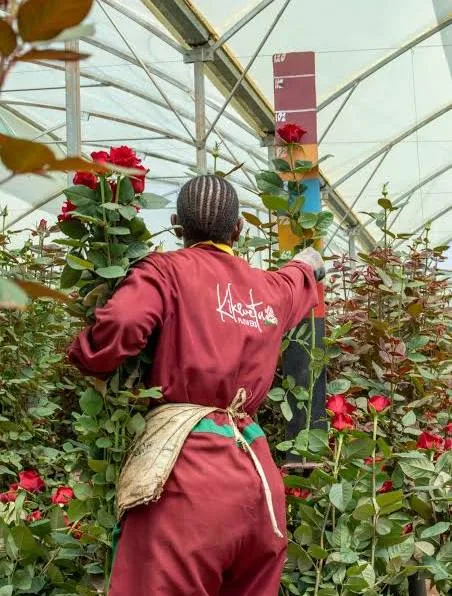
In 2024, the horticulture sector supported more than four million jobs and generated KSh136.6 billion in export earnings. Flowers, vegetables and fruits remain important exports to markets in Europe, the Middle East and Asia. However, the industry faces growing pressure from unpredictable weather, rising input costs, post-harvest losses, labour challenges and increasingly demanding export standards. Technology is emerging as an important tool in addressing these challenges. Kenya has more than 186 agritech startups and leads Africa in agricultural technology investment, creating opportunities to improve productivity, efficiency and market access.
Solar irrigation: powering production against climate change
Agriculture in Kenya remains heavily dependent on rainfall. Approximately 95% of smallholder crop production is rain-fed, while about 80% of the country is classified as arid and semi-arid land. Only around 3% of Kenya’s arable land is under irrigation, highlighting the potential for irrigation technology to improve agricultural productivity. Research indicates that irrigation can increase smallholder yields by two to five times, making affordable water access an important part of building resilience against climate variability. One company addressing this challenge is SunCulture, which provides solar-powered irrigation solutions designed to help farmers access water without relying on expensive fuel-powered pumps or unreliable electricity supplies. Its systems combine solar water pumps with irrigation equipment and additional services such as lighting and mobile phone charging. Through its pay-as-you-go model, farmers can access the technology while spreading the cost over time. SunCulture has served more than 60,000 customers and accounts for over 70% of the solar irrigation market in sub-Saharan Africa, according to the figures provided by the company.
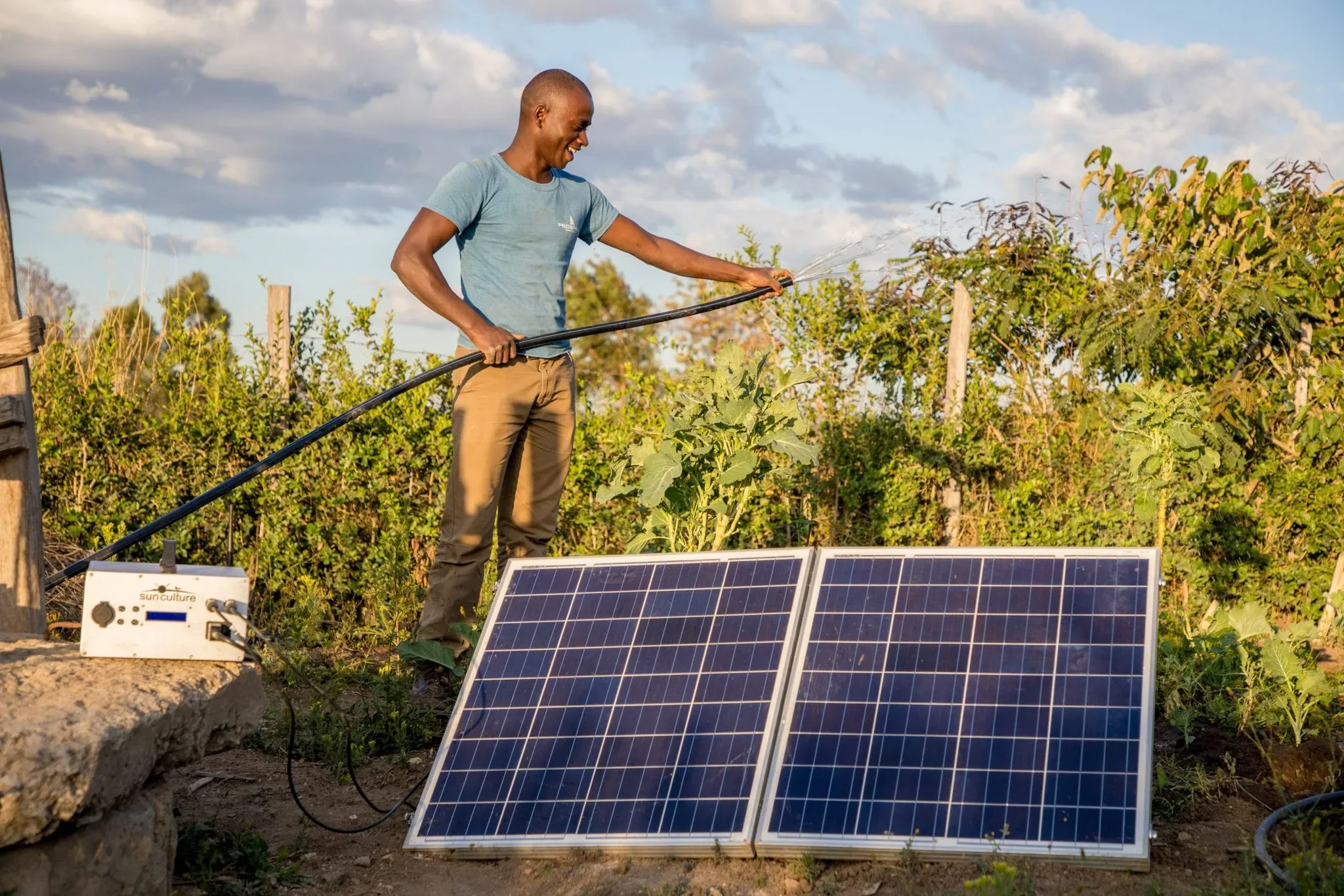
An evaluation by Duke University involving more than 750 households across six counties found that farmers using the systems saved an average of 17 hours a week compared with collecting water in jerry cans. The study also found that 92% of respondents reported improved resilience to climate shocks. For farmers such as Maurice Owino in Siaya County, access to solar-powered irrigation provides greater control over water supply and the ability to sustain production when rainfall is unreliable. SunCulture has also incorporated climate insurance and carbon credits into its offering, reflecting the growing links between agricultural technology, climate adaptation and sustainable financing.
Drones: precision agriculture takes to the skies
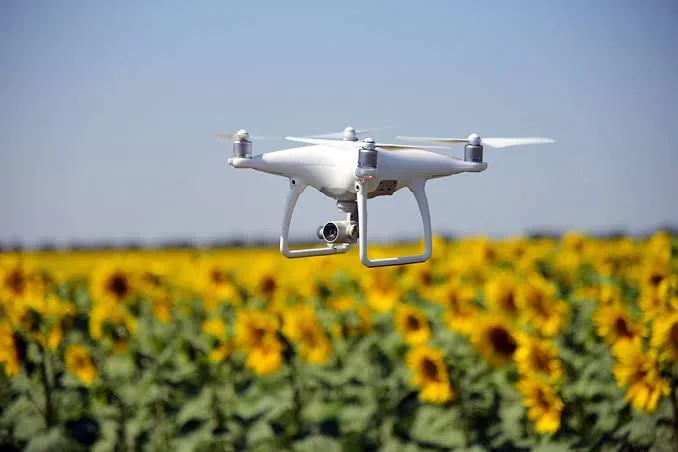
Unmanned aerial vehicles, commonly known as drones, are introducing new possibilities for crop monitoring and farm management. They can be used to identify crop stress, detect disease, map soil conditions and apply crop protection products with greater precision. The technology allows farmers to identify problems early and target specific areas of a field instead of treating entire farms uniformly. Reported benefits include pesticide reductions of up to 30%, water savings of around 40% and fertiliser savings of between KSh1,500 and KSh2,500 per acre. A drone can cover approximately 10 acres in an hour, depending on the operation and field conditions.
Fahari Aviation, a subsidiary of Kenya Airways, is among the organisations involved in advancing drone applications in agriculture. In April 2025, it signed a memorandum of understanding with the Agriculture Sector Network’s aak-GROW and CropLife Kenya to support the use of drone technology in agricultural operations. The initiative aligns with the Ministry of Agriculture’s strategic plan for 2023–2027, which recognises technology and innovation as important drivers of agricultural transformation.
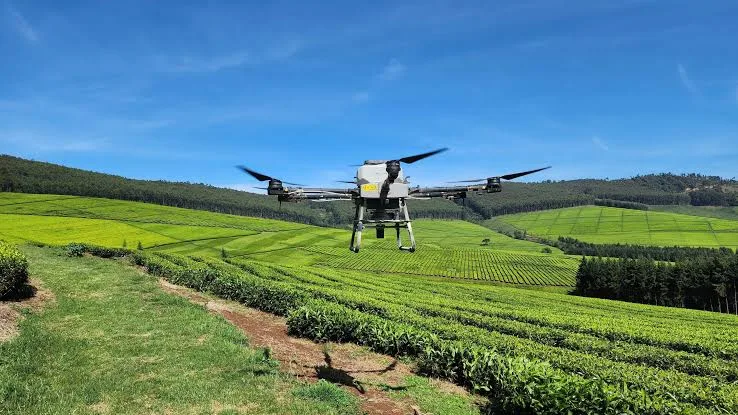
Farmers are also exploring how drones can work alongside other precision farming equipment. Examples include farmers such as Mbuki in Nairobi and Iland, who operates a 170-acre farm in Mau-Narok. The use of drones and GPS-enabled tractors can improve field operations and support more accurate farm management. However, regulatory requirements remain a challenge. The licensing process administered by the Kenya Civil Aviation Authority (KCAA) is viewed by some industry players as a bottleneck that can slow the wider adoption of agricultural drone services.
AI and digital platforms: putting data in farmers’ hands
Artificial intelligence and digital platforms are changing how farmers access agricultural advice, finance and inputs. By combining satellite imagery, machine learning and mobile data, agritech companies can develop services that respond to individual farmers’ needs.
Apollo Agriculture is one of the companies using this approach. Its model combines digital data and agricultural services to help smallholder farmers access financing, quality inputs and agronomic advice. Farmers apply through the platform and, if approved, receive a voucher to collect inputs from local stockists and repay after harvest. Apollo raised new funding in 2024 to accelerate its expansion across East Africa. The company’s model addresses three major barriers facing smallholder farmers: limited access to credit, difficulty obtaining agricultural inputs and inadequate access to agronomic knowledge. It uses data and digital tools to provide services that would have been difficult for many rural farmers to access just a decade ago.
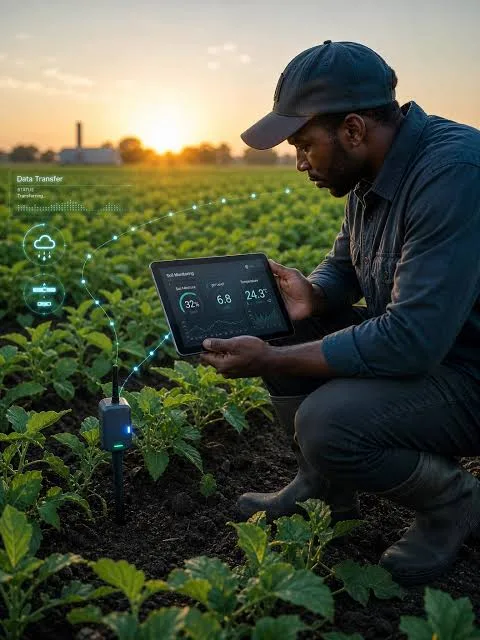
Safaricom’s DigiFarm platform has also played a significant role in digital agriculture. It offers farmers personalised crop recommendations, access to inputs on credit and market linkages through their mobile phones. The platform has reached hundreds of thousands of farmers across Kenya’s main growing regions.
Land O’Lakes’ Agritools advisory platform, deployed in Kenya, has also demonstrated the potential of digital agronomic advice. The platform helped maize farmers achieve an average yield of 2.4 metric tonnes per acre, nearly double the national average, by providing timely and customised recommendations. These platforms demonstrate how digital technology can bring together information, finance, inputs and advisory services, helping farmers make better-informed production decisions.
Digital market linkages: cutting out the middlemen
One of the most persistent challenges for Kenyan horticultural producers has been the inefficiency of traditional market chains. Farmers selling through brokers and open-air markets frequently receive only a fraction of the final retail price. Meanwhile, produce spoilage during transportation and at collection points contributes to post-harvest losses estimated at more than 30% for perishable produce.

Twiga Foods, founded in Nairobi in 2014, set out to address these inefficiencies by building a digital supply chain platform connecting smallholder farmers directly to urban retailers and food vendors. The company removes multiple layers of intermediaries by aggregating produce from more than 1,000 farmers, managing logistics and quality control, and coordinating payments and deliveries. Its network serves 140,000 vendors across 12 Kenyan cities, including Kirinyaga, Machakos, Kiambu, Meru and Embu. The model has reduced post-harvest losses by an estimated 30% and provided participating farmers with more reliable and transparent pricing. Twiga has raised more than USD 160 million from investors, including Goldman Sachs and the International Finance Corporation, reflecting the scale of the opportunity in improving agricultural supply chains.
iProcure offers a complementary digital supply chain solution, focusing on agricultural inputs. Its platform connects smallholder farmers to seeds, fertilisers and crop protection products through a mobile-enabled distribution network. By aggregating demand and improving distribution efficiency, the company has reduced input costs by between 20% and 30% compared with traditional retail channels. It has raised more than USD 10 million and expanded its operations into Uganda and Tanzania.

Together, these platforms illustrate how digital systems can improve both sides of the agricultural value chain: helping farmers access inputs more efficiently while connecting their produce to buyers.
Government and the Kenya Agricultural Observatory Platform
Technology adoption in Kenyan agriculture is not happening only through the private sector. The government has made digital agriculture a cornerstone of its agricultural strategy.
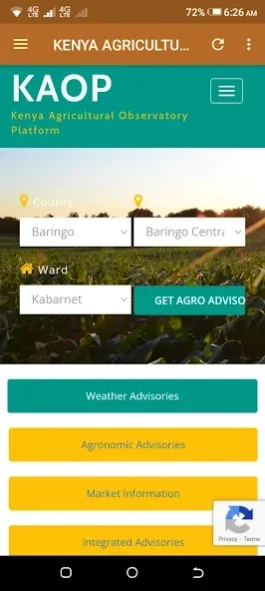
In partnership with the World Bank, Kenya’s Ministry of Agriculture developed the Kenya Agricultural Observatory Platform (KAOP) and a Big Data Platform. These initiatives provide farmers, extension officers and policymakers with high-resolution geospatial information on soil conditions, rainfall, crop performance and market information. The Ministry also launched the One Million Farmer Platform, which has connected 1.1 million farmers with 24 agritech startups and 27 county governments. The initiative has helped extend digital advisory services to farmers who might otherwise have limited access to agritech platforms.
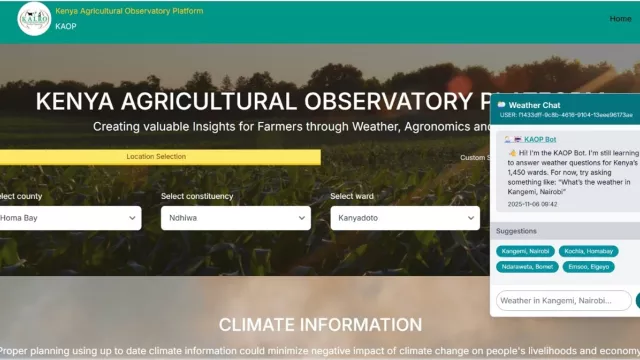
Kenya has also developed a Digital Agriculture Roadmap in partnership with the World Bank under the Agriconnect Initiative. The roadmap sets out how the country intends to integrate data infrastructure, digital finance and precision agriculture tools across the agricultural sector over the coming decade. These public-sector initiatives are important in creating an enabling environment for digital agriculture, particularly by improving access to information and connecting farmers with technology providers.
IoT in the greenhouse: smart sensors for protected horticulture
Kenya’s cut flower industry, centred around Lake Naivasha and the Rift Valley, operates at very high levels of technical sophistication and is among the global leaders in protected horticulture. Large-scale flower farms have long used controlled-environment technology. However, the integration of the Internet of Things (IoT)—networked sensors that monitor temperature, humidity, carbon dioxide and irrigation conditions in real time—is now extending to mid-scale vegetable and fruit producers.
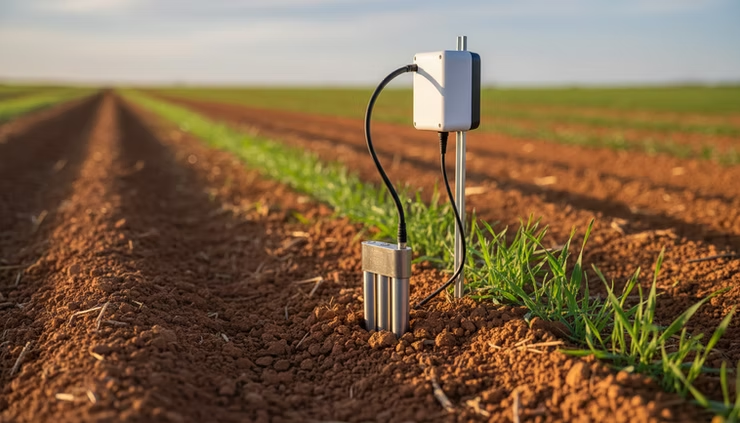
Davis & Shirtliff, a leading Kenyan water and energy solutions company, distributes the AquaCheck soil monitoring system. The technology uses networked sensors to deliver real-time soil condition data directly to farm management platforms. These tools enable growers to make irrigation decisions based on actual soil moisture readings rather than fixed schedules or guesswork. This can help reduce water consumption while improving crop consistency.
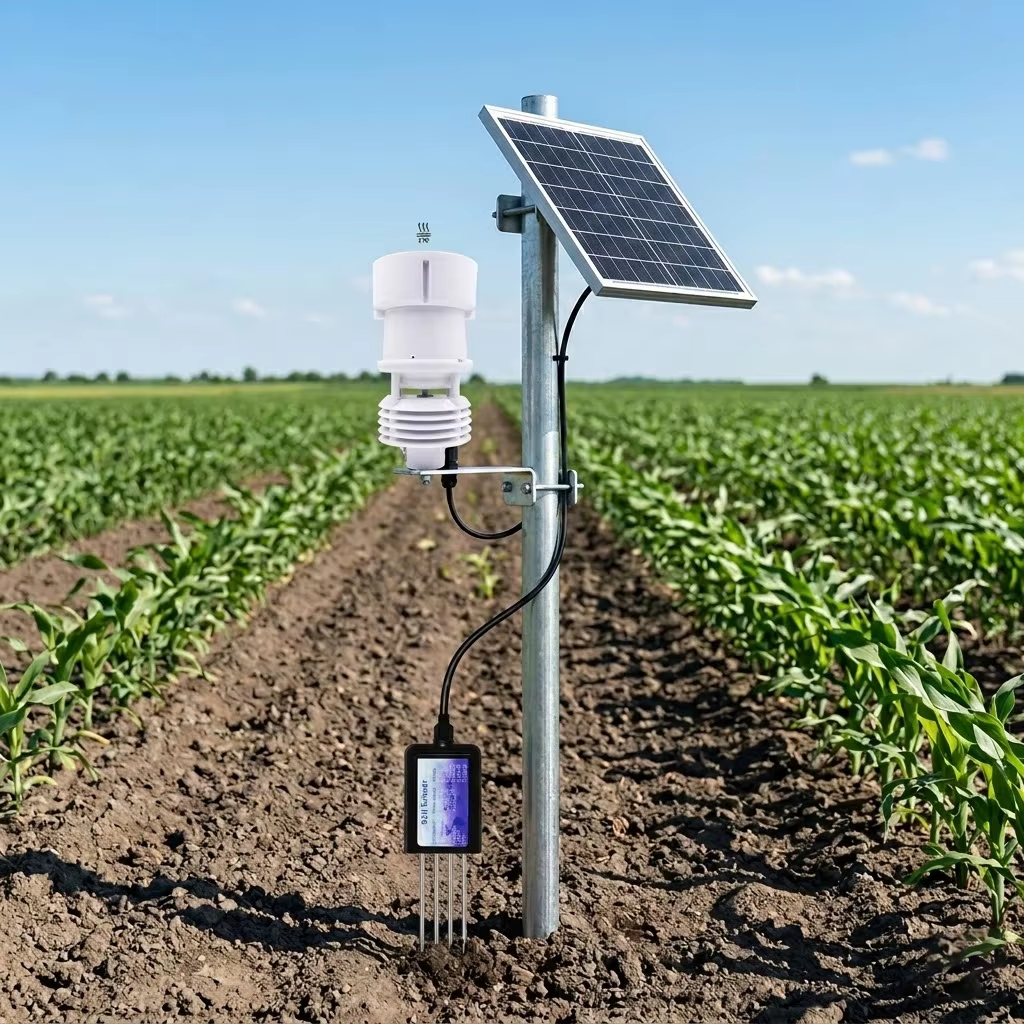
LoRaWAN sensor networks, which use long-range, low-power wireless technology, are also being tested in remote growing areas of Kenya. They can enable farmers in locations without reliable cellular coverage to connect soil and weather sensors to cloud platforms through satellite-linked networks. For protected horticulture, where environmental conditions directly influence crop quality and productivity, access to accurate real-time data can support more precise farm management.
The barriers to wider technology adoption
Kenya’s agritech story is genuinely impressive, but it would be misleading to present it without acknowledging the barriers that remain. Most of the technologies discussed are still inaccessible to the majority of Kenya’s smallholder farmers, who produce 70% of the country’s food but operate on tight margins and with limited capital. Rural connectivity remains a significant constraint. While mobile penetration is high, reliable broadband access is patchy outside urban and peri-urban areas, limiting the performance of cloud-based platforms and IoT systems.
The KCAA licensing process for drones is also seen by many as a bottleneck to faster adoption of aerial services. In addition, digital literacy gaps mean that even where tools are available and affordable, farmers often need sustained training and support to use them effectively.
Kenya’s horticulture export earnings also declined from USD 1.21 billion in 2023 to USD 1.06 billion in 2024. The decline was partly attributed to a stronger shilling, which made exports more expensive, and disruptions to freight routes through the Red Sea, which increased airfreight costs and extended transit times for perishable produce. These are precisely the kinds of supply chain vulnerabilities that digital traceability and logistics technologies can help address. However, effective solutions will require coordinated investment in infrastructure, regulation and technology.
Building a more connected horticultural sector
The technologies emerging across Kenya’s agricultural sector point to a future in which farmers can make decisions using more accurate information, manage resources more efficiently and connect to markets with fewer barriers. From solar-powered irrigation and drone-based crop monitoring to AI-driven advisory services, digital supply chains and smart greenhouse sensors, innovation is already changing how different parts of the sector operate.
The challenge now is to make these solutions accessible beyond large commercial farms and early adopters. Affordable financing, reliable connectivity, farmer training, supportive regulation and collaboration between government and private-sector players will be essential. For Kenya’s horticultural sector, the opportunity is not simply to adopt more technology, but to ensure that innovation translates into higher productivity, greater resilience, reduced losses and improved returns for farmers across the value chain.