

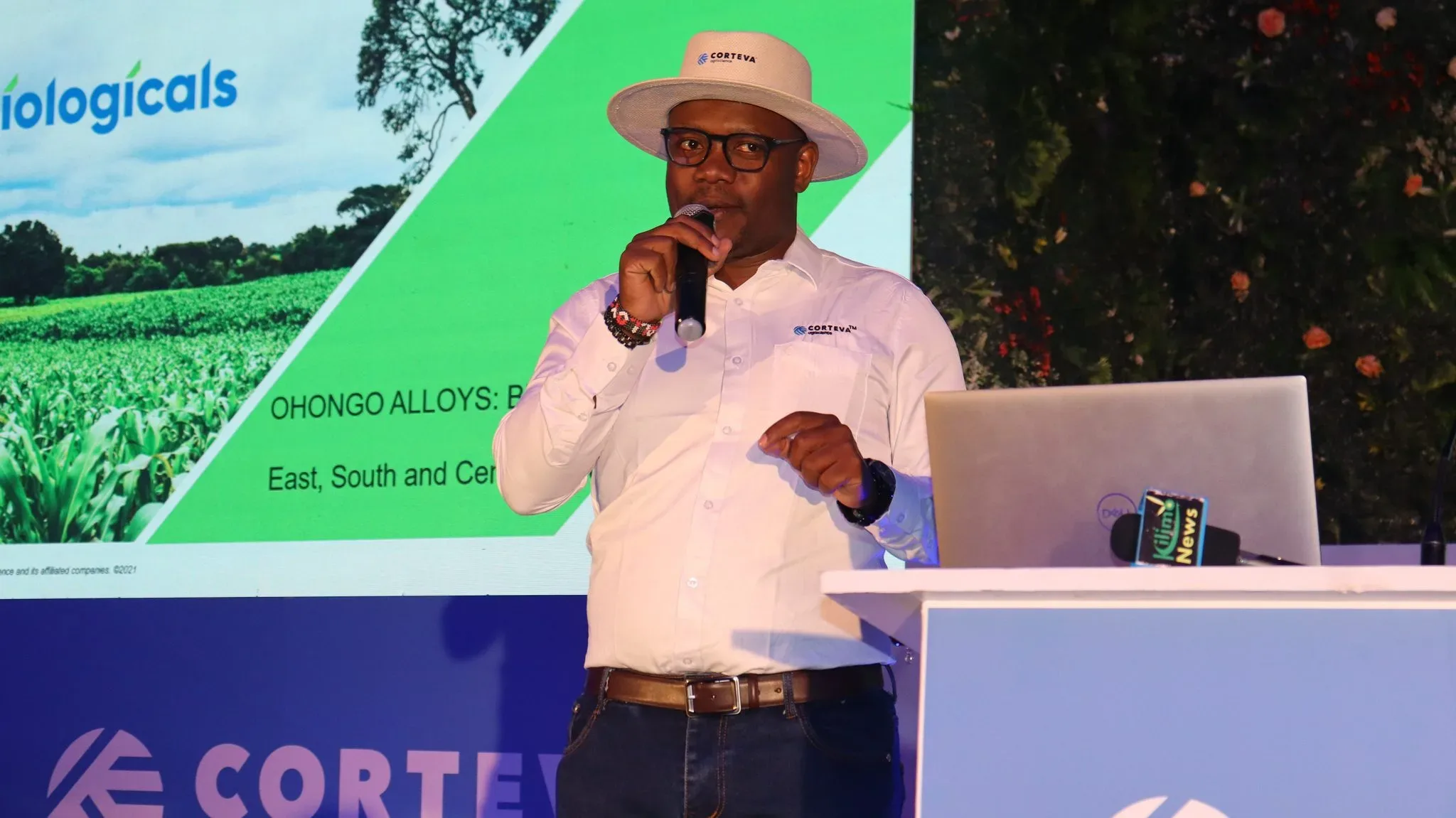
As farmers contend with increasingly unpredictable growing conditions and mounting pressure to produce more from available resources, Corteva Agriscience is expanding its agricultural innovation portfolio into biologicals, targeting three critical areas of crop production: performance, resilience and protection.
Agriculture is confronting a productivity challenge – global demand for food continues to rise as farmers contend with changing climatic conditions, declining soil quality, pressure on natural resources and the need to produce more sustainably. The pressures facing agriculture are coming from several directions. Global food demand continues to grow, creating pressure to expand agricultural production and, in some regions, convert more land and natural habitats into farmland. At the same time, farmers are contending with increasing threats to their crops. Corteva’s presentation notes that more than half of the world’s countries have been negatively affected by changing rainfall patterns and excessive temperature swings. Society is also demanding more from agriculture. Beyond increasing food production, the expectation is that the industry will deliver sustainable solutions that improve productivity while responding to the environmental pressures surrounding food production. This places greater responsibility on agricultural innovation to put effective, sustainable technologies into the hands of farmers. The challenge is not simply how to grow more, but how to help crops realise more of the productive potential already contained in their genetics.
Corteva Agriscience puts this challenge into perspective through two figures presented in its biologicals overview: global food production will need to increase by 60–70 per cent by 2050 to meet demand, while agricultural yields are growing at approximately 1.2 per cent annually, against an estimated requirement of up to 2.4 per cent. The difference points to a persistent gap between what crops are capable of producing and what farmers ultimately harvest.Addressing this gap requires looking beyond genetics and conventional crop management to the environmental conditions that influence plant development and productivity. It is this thinking that underpins the company’s move into biologicals. The new proposition brings together plant performance and biocontrol technologies within a science-led approach intended to help farmers improve crop productivity, strengthen resilience and protect yields.
Corteva’s biologicals strategy is built around three interconnected determinants of crop yield: genetics, management and environment. Genetics establishes a crop’s inherent productive potential through its varieties, traits, germplasm and hybrid characteristics. Management determines how effectively farmers support that potential through practices such as irrigation, soil preparation, fertilisation, crop protection and the use of agricultural technologies. The environment, however, introduces variables that can undermine both. Drought, excessive temperatures, flooding, salinity and soil fertility challenges can interfere with the biological processes that support plant growth and development. Even high-performing genetics and sound management practices cannot completely eliminate the effects of these conditions.
The yield equation
The distinction is central to Corteva’s explanation of the yield equation. Farmers have considerable influence over the genetics they select and the management practices they apply, including seed traits, crop varieties, irrigation, fertilisation programmes, crop protection and digital services. The environment is different. Weather patterns, drought, extreme temperatures and other environmental conditions remain largely outside the farmer’s control, yet they can determine how effectively a crop expresses its genetic potential. Corteva identifies more than 50 external factors that can influence crop yields, with environmental stressors accounting for significant losses in productive potential. The presentation draws attention to the cumulative effect of these stressors. Drought, salinity, flooding and extreme temperatures interfere with plants’ biological processes, reducing their ability to grow and perform as expected. Corteva cites research indicating that these stresses are responsible for the loss of more than 30 per cent of crops’ yield potential.

This loss is described as the yield gap: the difference between the yield a crop has the potential to achieve and what is ultimately realised under actual growing conditions. The implication is significant. A crop may have good genetics and receive appropriate management, but environmental stress can still prevent it from reaching its productive potential. Closing that gap therefore requires technologies that address the conditions affecting the plant, rather than concentrating exclusively on seed selection and conventional input application. The company’s argument is that agricultural innovation must address all three elements of the yield equation. Improving genetics and management remains important but farmers also need technologies that help plants respond to the environmental pressures they encounter during production. Biologicals represent an additional dimension of that response.
Corteva Biologicals
Corteva Biologicals is the company’s platform for plant performance and biocontrol solutions. Its approach brings together three essential components: active ingredients, delivery systems and scientific knowledge. The active ingredient technologies span a broad range of biological and naturally derived materials. These include live microorganisms, microbial extracts and metabolites, plant extracts, proteins and peptides, plant growth regulators, pheromones, viruses, nucleic acids, micronutrients and other nutritional components. Different ingredients have different functions and mechanisms of action depending on the intended agricultural application. Delivery systems determine how these technologies reach the plant and its growing environment. Corteva identifies foliar, in-furrow and seed-applied applications among the delivery approaches used in its biologicals platform.
Scientific knowledge provides the foundation for understanding how these technologies interact with plants and their environments. The company draws on disciplines including plant physiology, plant nutrition and microbiology to inform product development and application. The combination is important because biologicals are not a single category of agricultural input performing one uniform function. They encompass different technologies designed to influence plant processes, nutrient utilisation, stress responses and the management of pests and diseases. Their value therefore depends on understanding the science behind each technology and matching it to the agricultural challenge it is intended to address.
Corteva’s microbial library
Corteva’s biologicals development process begins with identifying the needs of farmers and translating those needs into criteria that guide research and product development. A central resource in this process is the company’s microbial library, which its presentation describes as containing more than 725,000 strains of bacteria and fungi. This collection provides a discovery platform for identifying microorganisms with potentially useful agricultural properties and developing technologies that can be applied in crop production.
The company’s development pathways extend beyond live microorganisms to include synthetic products, semi-synthetic products and natural products, including small-molecule technologies. But identifying a promising active ingredient is only one stage of the process. Corteva places emphasis on the quality, consistency and efficacy of the resulting solutions, with field testing and validation forming an important part of product development. The objective is to establish how technologies perform under actual growing conditions, rather than relying solely on laboratory findings. This distinction is particularly relevant in biologicals, where performance can depend on interactions between the product, the plant and its surrounding environment. The ultimate measure is whether a technology delivers a reliable and meaningful contribution to crop production.
Three priorities
Corteva has organised its biologicals approach around three priorities: Boost Performance, Build Resilience and Protect Potential. Together, these provide a framework for addressing crop requirements across different stages of production.
Boost Performance
The first priority focuses on activating the plant and its environment to maximise harvest potential. Corteva identifies three areas within this category: nutritional foundations, nutritional efficiency and physiological support. Nutritional foundations address the supply of essential nutrients required for plant growth and development. Nutritional efficiency focuses on improving nutrient availability, uptake and utilisation, helping crops make better use of the resources available to them. Physiological support targets the processes within the plant that influence growth and productivity.
The underlying objective is to improve the plant’s ability to use available resources, including nutrients, water and sunlight efficiently. This approach recognises that productivity is not determined by the quantity of inputs applied alone. The plant’s ability to access, absorb and utilise those inputs is equally important.
Build Resilience
The second priority addresses the stresses that can compromise crop development and productivity. Corteva divides this area into stress mitigation and plant health. Stress mitigation focuses on helping plants cope with abiotic stresses, including drought and salinity. Plant health addresses the biological pressures associated with biotic stresses, including those caused by pathogens and other harmful organisms.
The distinction reflects the different challenges farmers face in the field. Environmental stresses can disrupt plant functions and development, while biological threats can damage plant tissues, interfere with growth and reduce yields. Strengthening crop resilience is therefore an important part of maintaining productivity under increasingly demanding growing conditions.
Protect Potential: Pest and disease management
The third priority focuses on protecting the productive potential that farmers have invested in establishing. Corteva identifies disease management, insect management and nematode management as the three areas of intervention. These technologies are intended to address threats from fungal diseases, insect pests and harmful nematodes, helping protect crop health and preserve yield potential.
The approach positions biologicals as an additional component of crop protection programmes, with technologies that can contribute to integrated crop management. Taken together, the three priorities provide a broad framework extending from plant nutrition and physiological performance to stress management and crop protection.
The solutions behind the framework
Note to designer – add trademarks on product names
Corteva’s biologicals portfolio translates these three priorities into solutions targeting specific crop requirements.
| Product | Application area | Strategic priority |
| Mycoup | Nutritional foundations | Boost Performance |
| Utrisha Rhizo | Nutritional foundations | Boost Performance |
| Utrisha N | Nutritional efficiency | Boost Performance |
| Hold | Physiological support | Boost Performance |
| Bio-Forge Advanced | Stress mitigation | Build Resilience |
| Sugar Mover | Plant health | Build Resilience |
| Thydra | Disease management | Protect Potential |
| TepeztiX | Insect management | Protect Potential |
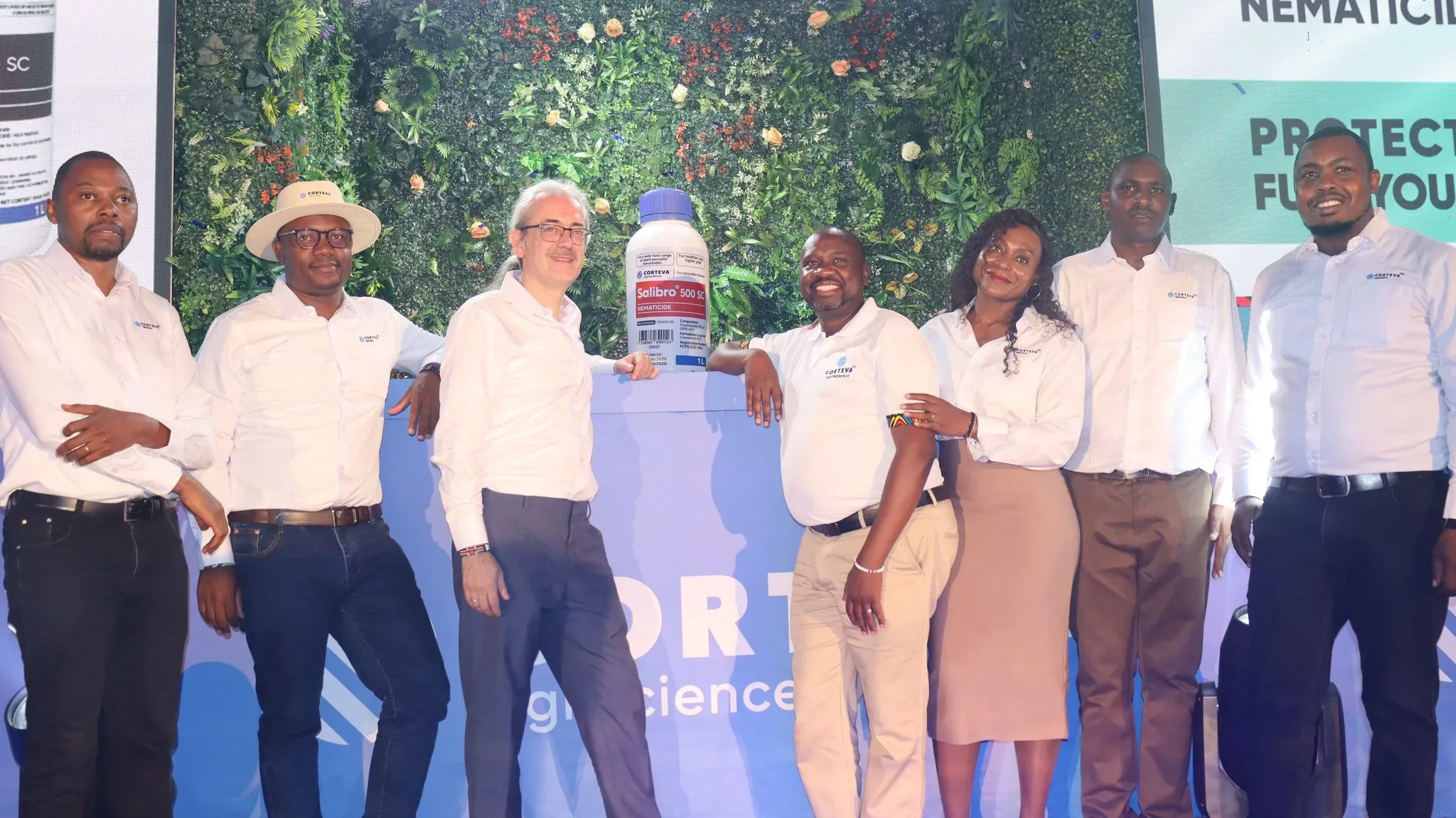
| Rizotec | Nematode management | Protect Potential |
The range illustrates the breadth of Corteva’s biologicals proposition. Rather than approaching biologicals as one type of product, the company is developing solutions around different plant functions and production challenges, from nutrient utilisation and physiological support to the management of crop stresses and biological threats.
Start, Grow and Finish
Corteva also presents its solutions through a Start, Grow and Finish framework, reflecting the different requirements of crops across the production cycle. The Start stage addresses the foundations needed to establish crop development, including nutrition and early plant support. Grow focuses on supporting plant development, physiological performance and resilience as crops progress through their growth cycle. Finish places emphasis on maintaining crop health and protecting the productive potential established during earlier stages.
The Start, Grow and Finish framework forms part of Corteva’s wider objective of building smart, integrated crop solutions rather than treating individual crop challenges in isolation. Its presentation maps the biologicals portfolio across the crop management cycle, bringing together nutritional foundations, nutritional efficiency and physiological support to boost performance; stress mitigation and plant health to build resilience; and disease, insect and nematode management to protect potential.
The approach recognises that crop productivity is shaped by a combination of requirements that evolve as the plant develops. Essential nutrients support plant performance, while improved nutrient availability, uptake and use efficiency help crops make better use of available resources. Physiological support targets the processes that drive productivity, while stress mitigation and plant health help plants withstand abiotic and biotic pressures. Disease, insect and nematode management provide further protection against threats that can compromise the crop.
By linking these interventions across Start, Grow and Finish, Corteva is positioning biologicals within a broader crop management programme. The emphasis is on addressing plant requirements throughout production, with the different solutions contributing to performance, resilience and protection at the appropriate stages.
The framework reinforces the company’s broader approach: biological technologies are intended to contribute at different points in crop production, with their application determined by the specific needs of the plant and the conditions in which it is growing. The solutions are therefore not interchangeable. Their relevance depends on the intended function, crop requirements and appropriate application within a production programme.
Science, performance and responsible adoption
The growing interest in biologicals also brings a responsibility to distinguish scientifically supported technologies from exaggerated claims. Understanding how biological products work can be complex. Their interactions with plants, microorganisms and the surrounding environment involve biological mechanisms that may differ considerably from those associated with conventional agricultural inputs. Corteva acknowledges the challenges of explaining these technologies and addressing misinformation in the market.
Its stated approach rests on three commitments. The first is scientific rationale: products should be introduced with a clear scientific understanding of their intended function and the mechanisms supporting their use. The second is proven field performance. Corteva says it will draw on its field science expertise to evaluate and select technologies that demonstrate consistent performance under practical growing conditions. The third is regulatory stewardship, ensuring that product development and use are guided by appropriate regulatory and stewardship principles.
These considerations matter in a market where farmer confidence will depend on credible product information, demonstrated efficacy and responsible application.
Written by Catherine Riungu (catherine@hortinews.co.ke) and Alloys Ohongo Business Development Manager ESCA(East, South and Central Africa) Corteva, Corteva Biologicals ( alloys@corteva.com )