

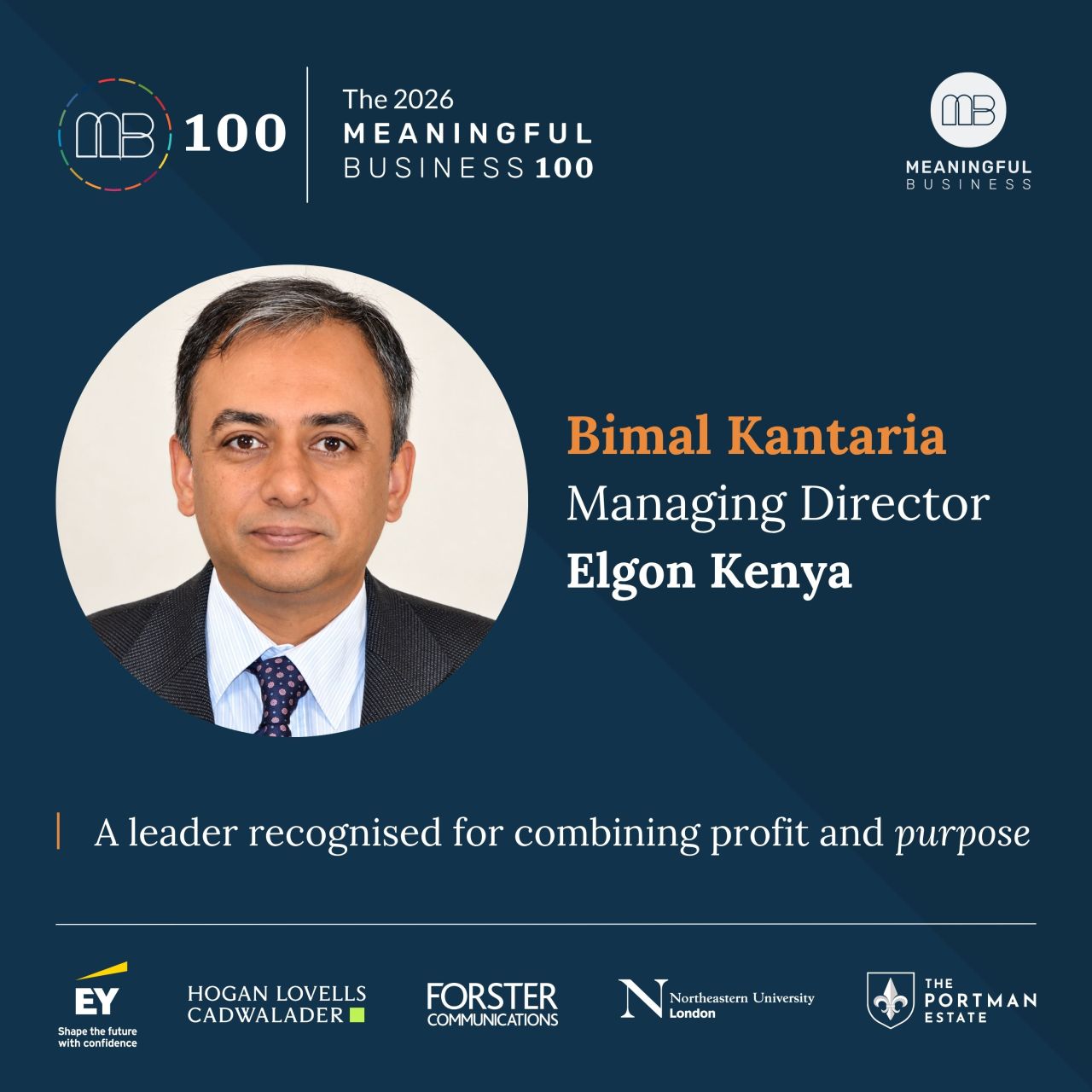
Kenyan agribusiness leadership has earned international recognition after Dr. Bimal Kantaria, EBS, OGW, Managing Director of Elgon Kenya Limited, was named among the 2026 Meaningful Business 100 (MB100), a global initiative celebrating leaders who combine commercial success with positive social and environmental impact. The recognition places Kantaria among 100 leaders selected from across the world for their work in advancing business approaches that seek to address complex social and environmental challenges while creating economic value.
Elgon Kenya announced the recognition on LinkedIn, describing it as a proud moment for the company and congratulating its managing director alongside the other members of the 2026 cohort. The announcement, published following the official unveiling of the 2026 honourees on 20 October, highlights the growing international attention being given to leadership that looks beyond financial performance to consider how businesses can contribute to a fairer and more sustainable future. For Kenya’s agribusiness sector, Kantaria’s inclusion brings international visibility to a business leader operating in an industry closely connected to agricultural productivity, farm profitability and the sustainable management of soil resources.
Global recognition for purpose-driven leadership
The Meaningful Business 100 is an annual initiative that recognises and supports 100 exceptional leaders who combine profit with purpose, using business to deliver solutions to social and environmental challenges. The initiative brings together social entrepreneurs, corporate sustainability executives and impact investors whose work aligns with the United Nations Sustainable Development Goals (SDGs). According to information released by Meaningful Business, the 2026 cohort was selected from more than 900 nominations worldwide. Candidates were assessed by a panel of 27 expert judges against five criteria: equity, impact, innovation, leadership and scalability.
These criteria examine the broader value of a leader’s work, including its potential to deliver meaningful outcomes, address inequalities, introduce new approaches and expand solutions that can benefit more people or communities. Kantaria’s selection places him within an international network of leaders recognised for pursuing business models that connect economic activity with wider social and environmental objectives. However, the MB100 recognition is awarded to the selected leaders; it does not, by itself, constitute a company-wide certification or an endorsement of every product or activity associated with their organisations.

Why the recognition matters to agribusiness
Agriculture faces the continuing challenge of increasing productivity while managing soil health, natural resources, production costs and the environmental consequences of farming. For Kenya, these issues are particularly important as farmers seek to improve yields, maintain soil fertility and build more resilient production systems in the face of changing climate conditions and pressure on farm incomes. As managing director of Elgon Kenya, a company operating in the agricultural inputs sector, Kantaria works within an industry that plays a significant role in the supply of products and solutions used by farmers.
His recognition provides an opportunity to highlight the relationship between business leadership and the wider responsibilities of the agricultural inputs industry, including the need to support productive farming systems and the long-term sustainability of agricultural resources. The MB100 programme’s emphasis on impact, innovation and scalability also reflects a broader international discussion about how businesses can contribute to development challenges while remaining commercially viable. Although the published announcement does not identify a specific project or achievement as the reason for Kantaria’s selection, the recognition puts his leadership within this global conversation on business purpose and sustainable development.
From agricultural inputs to a broader soil-health agenda
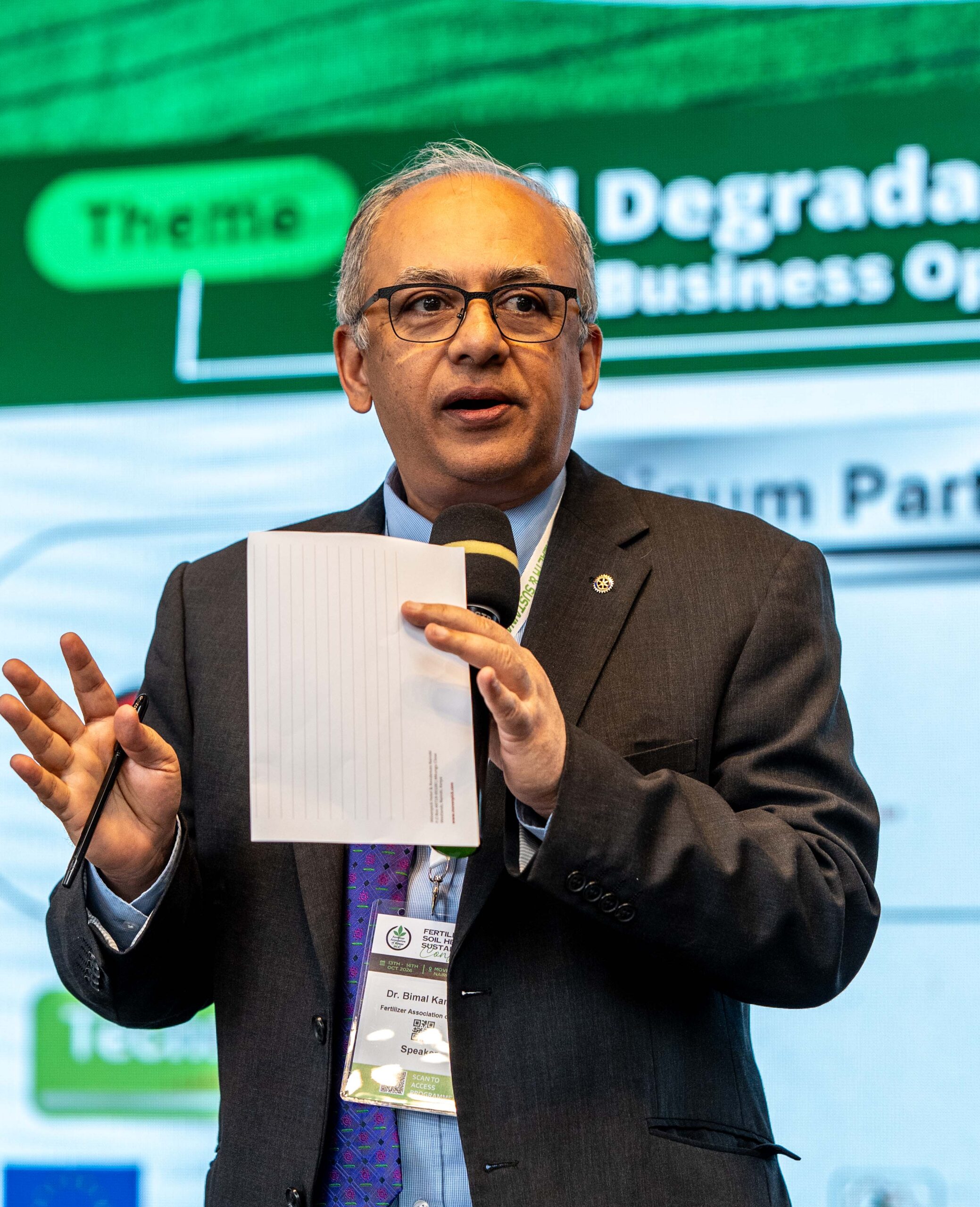
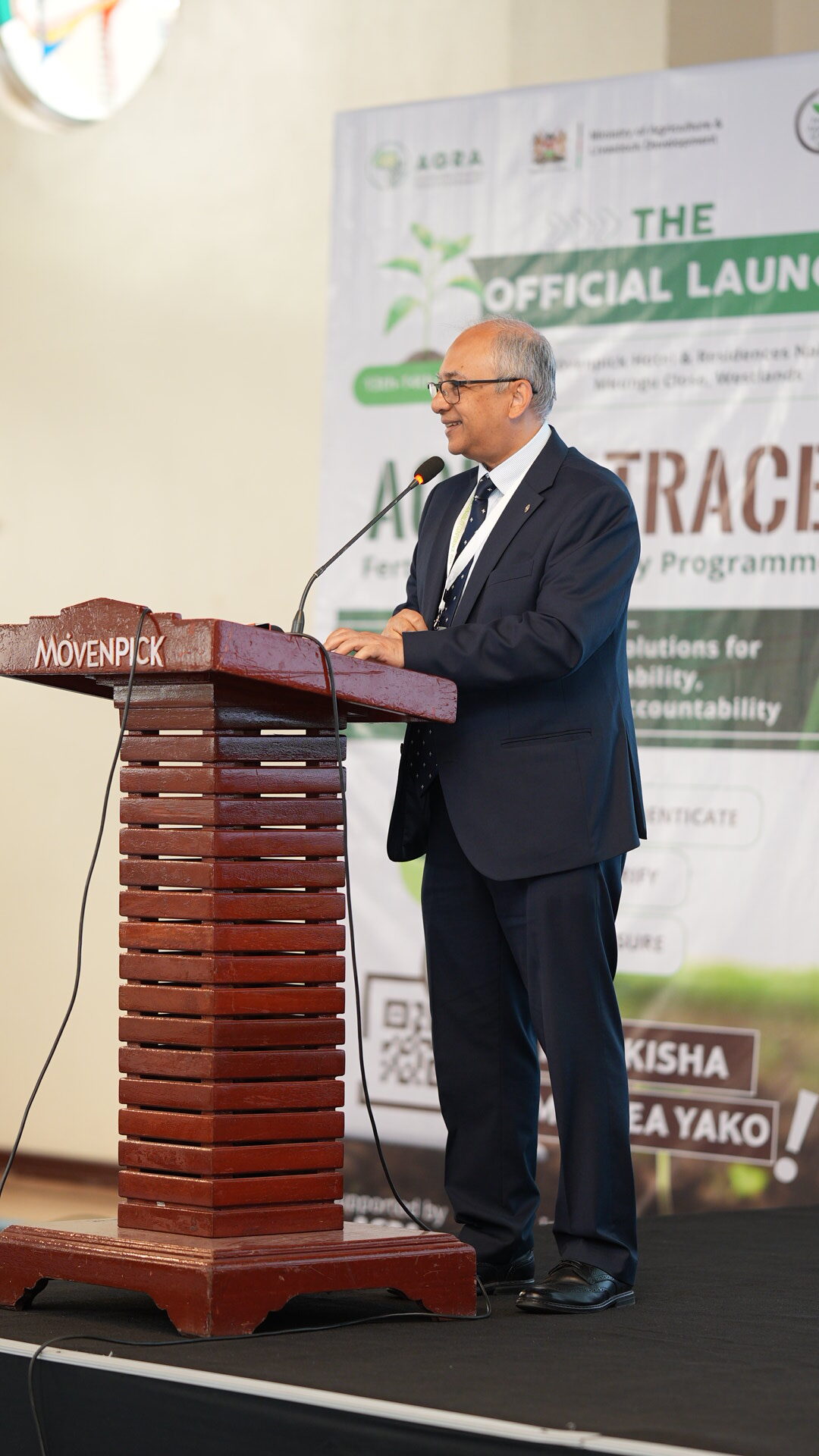
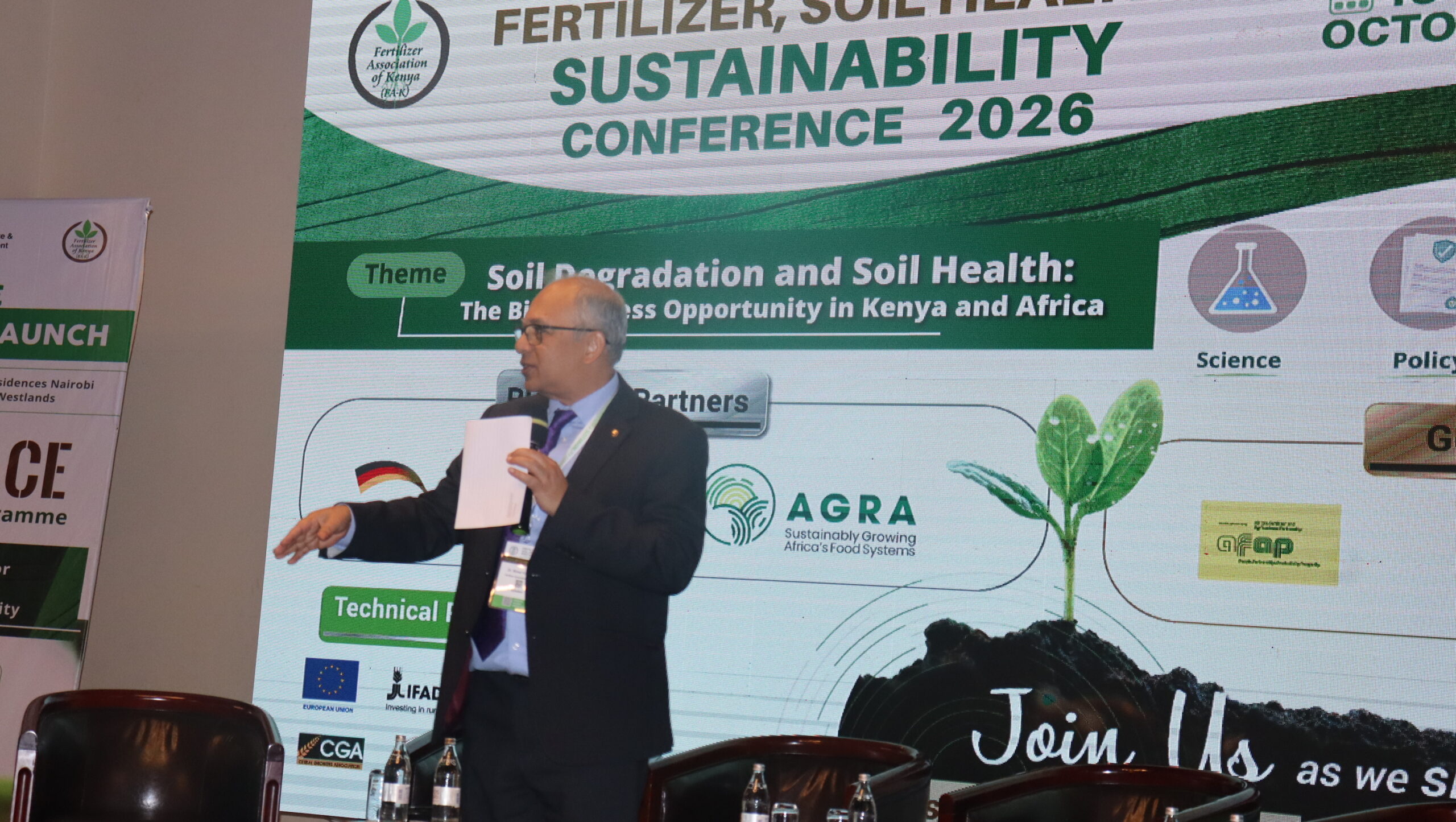
Kantaria is also associated with efforts to broaden the conversation around soil health in Kenya’s agricultural sector. As chair of the Fertilizer and Soil Health Alliance of Kenya, he has been involved in the sector’s shift towards a more comprehensive approach that considers mineral fertilisers, organic fertilisers, soil conditioners and other inputs that can help farmers improve productivity and soil health. The alliance was established to bring together a wider range of agricultural input businesses and stakeholders, moving beyond a narrow focus on fertiliser representation towards a more holistic soil-health agenda.
This wider perspective is relevant to Kenya’s agricultural development, where soil fertility management remains central to improving yields, supporting farmers’ incomes and making production systems more sustainable. It also illustrates the importance of collaboration between agricultural businesses, farmers, researchers and other stakeholders in developing solutions suited to the needs of different farming systems. While the MB100 announcement does not attribute Kantaria’s selection specifically to his soil-health work, the recognition offers a timely opportunity to consider how leadership in agricultural inputs can contribute to wider development priorities.
A global network for continued impact
Beyond recognition, the Meaningful Business 100 programme provides selected leaders with access to a global peer network, capacity-building resources and pro bono professional support intended to help them strengthen their work. The programme’s support ecosystem includes organisations such as EY, Hogan Lovells, Forster Communications, Northeastern University London and The Portman Estate, as identified in Elgon Kenya’s announcement. Participation offers the honourees opportunities to exchange ideas, access expertise and build relationships with leaders working on similar social and environmental challenges. For business leaders in agriculture, such networks can provide opportunities to learn from approaches developed in other markets and explore how ideas can be adapted to local