

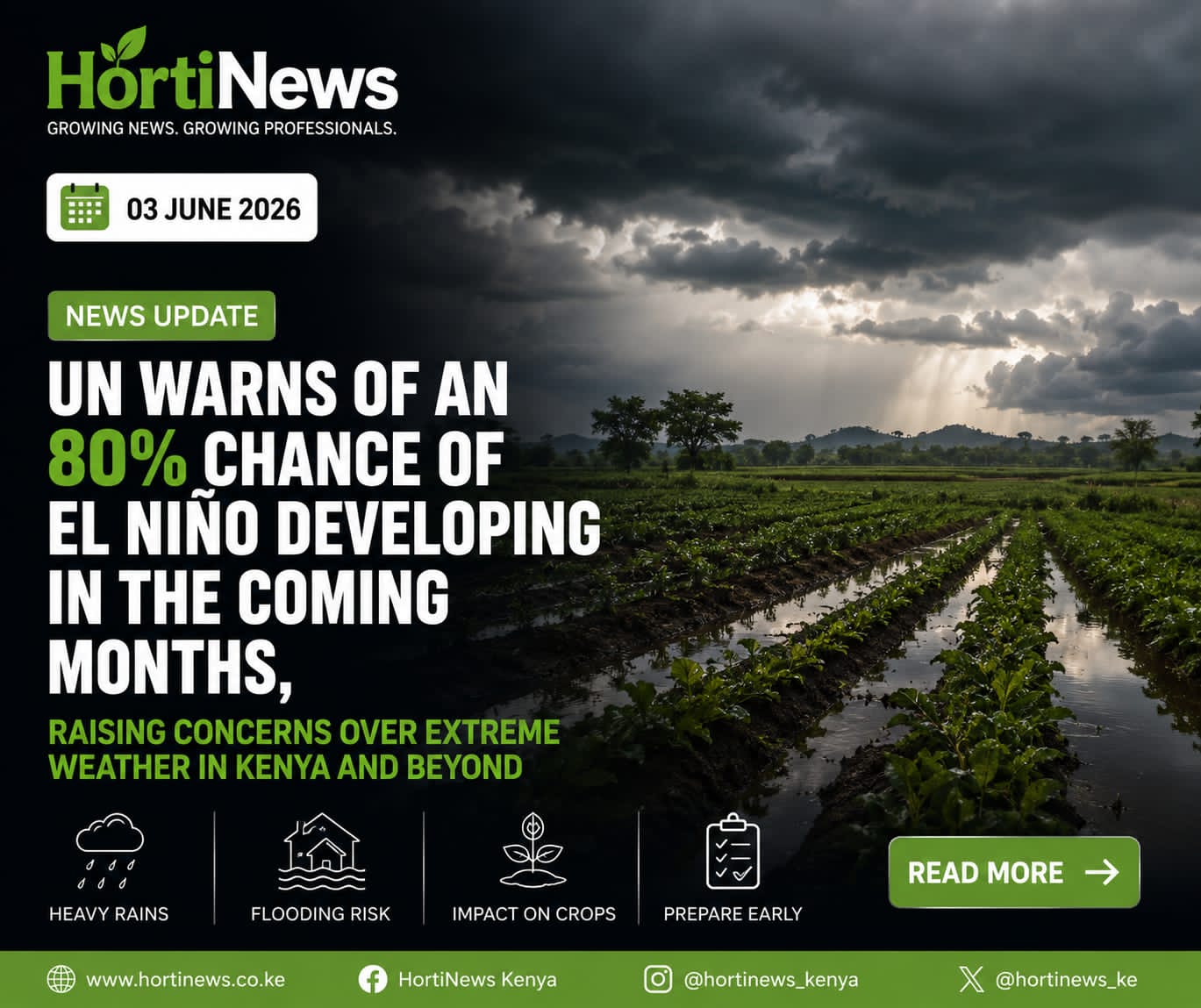
Kenyan farmers are being encouraged to plan ahead following growing indications that El Niño conditions could develop and persist through the end of 2026, with significant implications for rainfall, crop performance, and food security across the country.
The Kenya Meteorological Department (Kenya Met) has confirmed it is closely monitoring evolving weather patterns, with current forecasts pointing to a high likelihood of El Niño occurrence. Historically, El Niño events have been linked to enhanced rainfall during Kenya’s October to December “short rains” season — though regional impacts and timing can vary considerably.
Critically, weather experts are projecting that Kenya could first experience several relatively dry months before any El Niño-related rains arrive, meaning farmers face a two-phase challenge: managing dry conditions in the near term, then adapting to potentially excessive rainfall later in the year.The warning from Kenya Met aligns with broader international concern. The United Nations has urged countries worldwide to prepare for El Niño’s potential effects, noting that the climate phenomenon “can significantly influence weather patterns, agricultural production and food security.”
For Kenya — where agriculture accounts for a significant share of GDP and livelihoods — that warning carries particular weight.
The El Niño forecast presents a mixed picture for Kenya’s agricultural sector.On the positive side, adequate rainfall could support:
- Improved crop establishment across smallholder farms
- Pasture regeneration for livestock farmers
- Better water availability for irrigation
However, excessive or poorly distributed rainfall brings serious risks, including flooding, waterlogging, crop diseases, and post-harvest losses — all of which can quickly erode the gains that good rains might otherwise bring.
Agricultural experts are advising Kenyan farmers to act now rather than wait for conditions to arrive. Recommended climate-smart practices include:
- Using certified and early-maturing seed varieties suited to variable rainfall
- Preparing drainage systems to reduce flood and waterlogging damage
- Conserving soil moisture during the expected dry months ahead
- Monitoring official weather updates from Kenya Met before making planting decisions
- Diversifying crops to spread climate-related risk across the season
For Kenya’s horticultural sector — particularly producers of vegetables, potatoes, and fruit — increased humidity under El Niño conditions can create favourable environments for fungal and bacterial infections. Experts are advising producers to strengthen disease management programmes well ahead of the rains.
Livestock farmers are also being encouraged to harvest and store fodder where possible, while taking advantage of any improved pasture conditions that wetter weather may bring.
Climate variability has become an increasingly important factor in Kenya’s agricultural planning, making access to timely, accurate weather information essential for farmers at every scale.
As forecasts continue to evolve, farmers are advised to rely on official advisories from Kenya Met and agricultural extension services to guide planting schedules and farm management decisions.
While El Niño can deliver much-needed rainfall to drought-affected areas, experts are clear: preparedness will determine whether farmers maximise the benefits or suffer avoidable losses.
Farmers are encouraged to visit the Kenya Meteorological Department website for the latest seasonal forecasts and agricultural weather advisories.