

Major gathering to showcase innovations in sustainable agri-food systems, with special emphasis on horticultural advancements
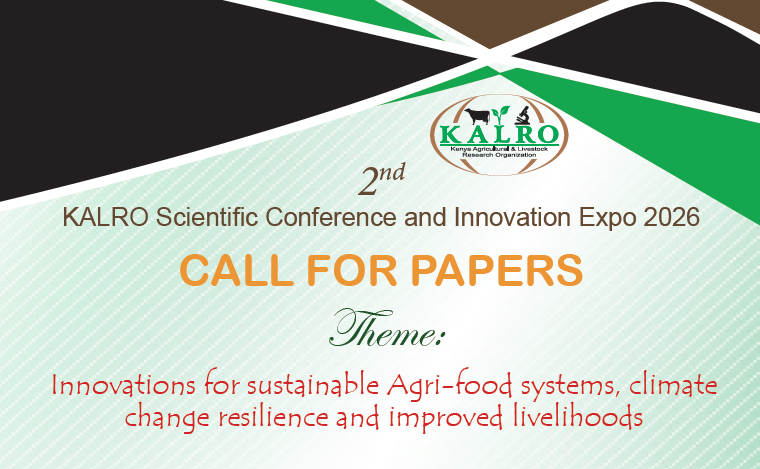
The Kenya Agricultural and Livestock Research Organization (KALRO) has announced its second Scientific Conference and Innovation Expo, scheduled for May 18-22, 2026, at KALRO Headquarters in Nairobi. The conference, themed “Innovations for Sustainable Agri-food Systems, Climate Change Resilience and Improved Livelihoods,” presents a significant opportunity for horticultural researchers and practitioners to share breakthroughs and forge new collaborations.
Key Opportunities for Horticulture Sector
The conference offers multiple pathways for horticultural stakeholders to engage with cutting-edge research. With 17 distinct subthemes, several areas directly impact the horticultural industry, including crop varieties and productivity, plant health and biosecurity, sustainable seed systems, and water management technologies.
“This platform provides an invaluable opportunity for consolidating progress and fostering strategic dialogue among researchers, policymakers, development partners, farmers, and the private sector,” organizers stated in the call for papers.
Submission Details and Deadlines
Researchers planning to present papers face an approaching deadline of February 27, 2026, for full paper submissions. The timeline includes abstract submissions by February 13, with notifications of acceptance expected by March 27. Final versions of accepted papers must be submitted by April 10, 2026.
Papers will undergo pre-screening and peer review, with successful submissions published in the conference proceedings and select papers featured in a special issue of The East African Agriculture and Forestry Journal.
Hybrid Format Expands Reach
Recognizing the need for broader accessibility, the conference will operate in both physical and virtual formats. Virtual participants can attend remotely via an online platform, with links to be provided closer to the event date. Those presenting virtually will be requested to share pre-recorded presentations as backup.
The registration period runs from February 13 to April 17, 2026, with early bird rates available for those registering by April 10. Virtual participation fees for scientists and professionals range from 2,000 to 3,000 Kenyan Shillings for local and East African Community participants, with international rates set at 50 to 60 US dollars.
Focus Areas Relevant to Horticulture
Several subthemes hold particular relevance for horticultural operations. The crop varieties and productivity subtheme welcomes breeding results, agronomic interventions, and crop management innovations across diverse agroecologies. Plant health sessions will address emerging pests and diseases, biosecurity protocols, and integrated pest management strategies crucial for horticultural production.
Water management remains a critical concern for horticulture, with dedicated sessions on irrigation technologies, water harvesting models, and conservation practices. The conference will also explore ecological-organic farming systems, addressing organic farming techniques and circular economy models increasingly relevant to horticultural enterprises.
Value addition and food safety subthemes offer opportunities to discuss post-harvest technologies, quality assurance systems, and cottage industry development, all essential components of horticultural value chains.
Beyond Research Papers
The conference extends beyond traditional paper presentations. A dedicated innovation expo will run throughout the week, showcasing technologies, products, and management practices from KALRO and partner organizations. Both physical exhibitions at KALRO Headquarters and virtual exhibitions during conference sessions will highlight practical innovations ready for adoption and scale-up.
Poster sessions will provide alternative presentation formats, with optional three-minute oral poster presentations available for virtual and in-person participants. All posters must fit standard A0 dimensions and should effectively communicate complete research stories through harmonious combinations of text and illustrative material.
Capacity Building and Networking
Beyond knowledge sharing, the conference emphasizes capacity building for young and upcoming scientists, offering mentorship opportunities and training in scientific writing and presentation skills. The event aims to stimulate collaboration across public, private, and research sectors, with participants expected to engage in peer review by agreeing to review at least three papers upon submission.
The conference aligns with Kenya’s Bottom-Up Economic Transformation Agenda and the global Green and Blue Economy framework, positioning scientific innovations as drivers of productivity, sustainability, and commercialization in the agricultural sector.
How to Participate
Interested participants should submit manuscripts of no more than 3,000 words in British English, formatted in Times New Roman font size 12 on A4 paper. Submissions must align with one of the 17 subthemes and include title, author information with institutional affiliations, abstract, introduction, materials and methods, results, discussion, conclusion, recommendations, acknowledgements, and references.
Full submission guidelines and registration details are available through the conference email addresses: conference@kalro.org and kalroconference2026@gmail.com. Exhibition inquiries should be directed to expo@kalro.org or kalroexpo2026@gmail.com.
For the horticultural sector facing mounting pressures from climate change, evolving pest complexes, and market demands for sustainable production, this conference represents a crucial forum for evidence-based solutions and collaborative problem-solving. The gathering promises to bridge research and practice, offering insights that can inform policy, empower communities, and advance Kenya’s agricultural transformation agenda.