

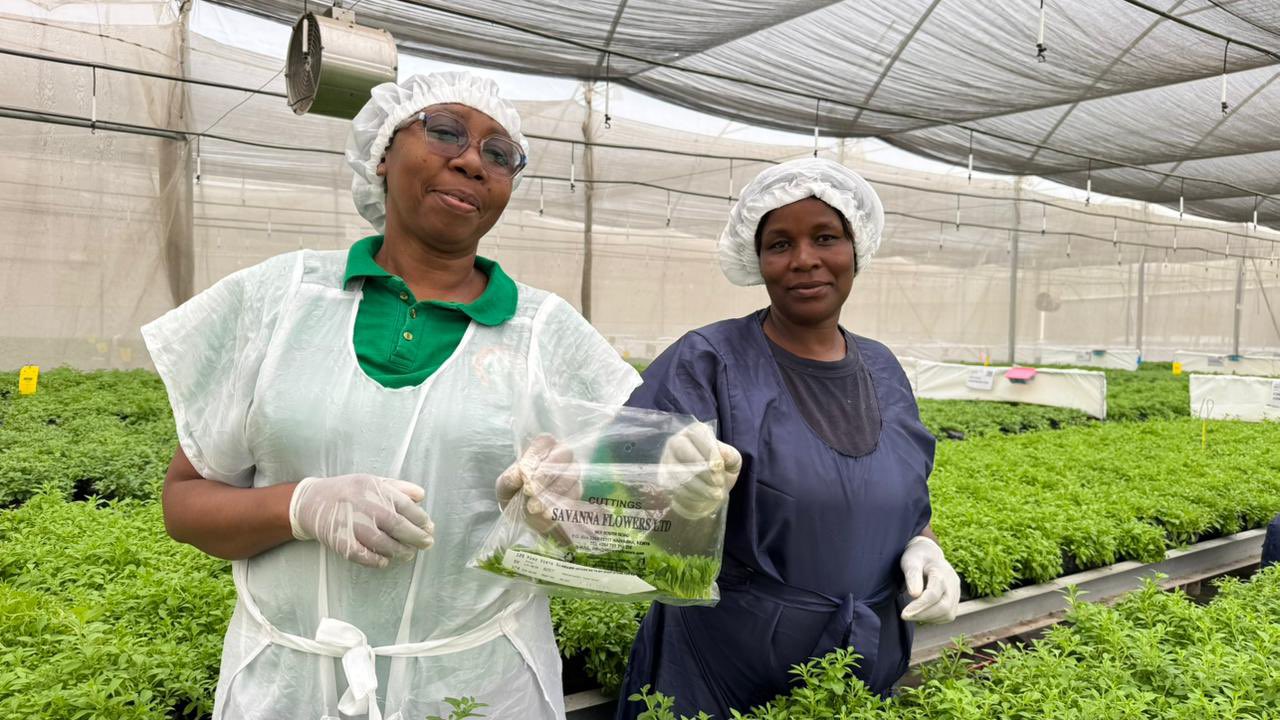

Kenya has commenced historic exports of Petunia and Calibrachoa ornamental plants to the EU market, opening new revenue streams for the country’s thriving floriculture sector worth $1.10 billion.
On November 1, 2025, Kenya successfully exported its first consignment of unrooted Petunia and Calibrachoa cuttings to the EU market , with Savanna Flowers PLC—a specialized cuttings and young plants supplier located on Moi South Lake Road in Naivasha, Nakuru Countybecoming the pioneering facility to achieve this export milestone.
This breakthrough comes after years of restricted market access, positioning Kenya to capture a share of the lucrative European ornamental plants market where these popular bedding plants are in constant demand.
Why Kenya couldn’t export these plants before
For many years, Kenya faced significant barriers exporting Solanaceae family plants to the European Union due to biosecurity concerns. The Solanaceae (nightshade) family includes not only ornamental Petunia and Calibrachoa, but also economically critical crops like potatoes, tomatoes, and capsicum are crops of major importance to European agriculture that authorities wanted to protect from potential virus diseases.
The EU maintained strict phytosanitary restrictions on these plants to safeguard their agricultural sector from exotic pests and pathogens that could threaten food production.
Regulatory approval opens market access
The breakthrough came with EU Regulation 2025/1082, issued in June 2024, which specifically approved Kenya to export unrooted Petunia and Calibrachoa cuttings and their hybrids to all EU member states . This regulation represents years of sustained diplomatic and technical efforts by Kenyan authorities to demonstrate their phytosanitary capabilities and compliance standards.
Market potential: why Petunia and Calibrachoa matter
Popular ornamental plants with global demand
Petunia and Calibrachoa are widely valued as popular bedding and ornamental plants, known for drought tolerance, ease of cultivation, and beautiful flower varieties. These characteristics make them highly desirable for various applications across temperate regions.
Calibrachoa, commonly known as “Million Bells,” are suitable for container gardening and hanging baskets , making them particularly popular in urban and suburban landscaping throughout Europe, Japan, Russia, and North America. The plants are prolific bloomers from spring to frost, providing extended ornamental value that justifies premium pricing.
Low-maintenance appeal drives market growth
Calibrachoa do not require deadheading, and unlike petunia’s foliage, their foliage is not sticky, making them attractive to both professional landscapers and home gardeners seeking low-maintenance options. Both petunias and calibrachoas are drought-tolerant in the landscape , an increasingly important characteristic as water conservation becomes a priority in European gardening.
The plants’ versatility extends to multiple market segments—from mass-market garden centers to high-end landscape design projects, creating diverse revenue opportunities for Kenyan exporters.
Kenya’s floriculture sector: a growing economic powerhouse
Impressive market size and growth trajectory
The Kenya Floriculture Market is expected to reach USD 1.10 billion in 2025 and grow at a CAGR of 4.90% to reach USD 1.40 billion by 2030 . This robust growth trajectory underscores the sector’s increasing importance to Kenya’s economy.
Kenya is the leading exporter of rose cut flowers to the European Union with a market share of almost 40% , demonstrating the country’s established reputation for quality floriculture products. Kenya is currently the fourth largest exporter of cut flowers globally and the number one exporter to the European Market.
Employment and economic impact
Kenya’s floriculture sector provides some 500,000 jobs and supports three million households while generating substantial foreign exchange earnings Hortinews. Over 500,000 people, including over 100,000 flower farm employees, depend on the floriculture industry, impacting over 2 million livelihoods.
The sector’s strategic importance extends beyond direct employment to encompass supporting industries including logistics, packaging, agricultural inputs, and technical services.
Geographic Advantages
The main production areas in Kenya are around Lake Naivasha, Mt. Kenya, Nairobi, Thika, Kiambu, Athi River, Kitale, Nakuru, Kericho, Nyandarua, Trans Nzoia, Uasin Gishu and Eastern Kenya. These regions benefit from ideal climatic conditions—high altitude, equatorial location, and moderate temperatures—that enable year-round production with exceptional quality.
KEPHIS: ensuring phytosanitary excellence
Leadership commitment to export standards
Prof. Theophilus Mutui, KEPHIS Managing Director, met with facility representatives to reaffirm the organization’s commitment to supporting all producers in meeting EU phytosanitary import requirements. Prof. Mutui holds a Ph.D. in Horticultural Sciences from Leibniz University of Hannover, Germany, and has over 25 years of experience, bringing extensive technical expertise to Kenya’s plant health regulation.
Prof. Mutui emphasized that KEPHIS will continue conducting regular inspections, certification procedures, and advanced laboratory diagnostic services to ensure consistent compliance and sustain long-term market access.
Comprehensive phytosanitary support services
KEPHIS provides multi-layered support to floriculture exporters including:
- Regular phytosanitary inspections at production facilities
- Certification procedures aligned with international standards
- Advanced laboratory diagnostic services for pest and disease detection
- Ongoing compliance monitoring to maintain export authorization
- Technical advisory services to help producers implement best practices
Kenya has put in place mechanisms to ensure that flowers are checked from production to the point of exit, through to the market , demonstrating a systems approach to phytosanitary management that meets stringent EU requirements.
Savanna flowers PLC: pioneer export facility
Savanna Flowers PLC, the first Kenyan facility to export Petunia and Calibrachoa to the EU, specializes in producing cuttings and young plants. The farm is located in Africa close to the Equator at Lake Naivasha in Kenya at an altitude of 1,900m Savannaflowers, providing optimal growing conditions for diverse plant species.
The company maintains expertise in producing various plant categories including pelargoniums, bedding plants, perennials, grasses, and herbs, positioning it well to expand its Solanaceae plant production as market demand grows.
Market diversification amid industry challenges
Addressing competitive pressures
In 2024, horticulture exports dropped by Ksh20 billion (US$131 million) to Ksh137 billion (US$896 million), a decline linked to a stronger shilling and increased competition. This context makes market diversification through new product categories like Petunia and Calibrachoa particularly strategic.
According to a January 2025 report by COLEAD, funded by the European Union, Kenyan flower growers are being advised to expand beyond Europe, build direct trade relationships with retailers, and adopt a hybrid approach for sea and air freight.
Maintaining EU rose export standards
While expanding into ornamental plants, Kenya continues managing challenges in its core rose export business. Due to frequent interceptions of Kenyan rose exports, the EU has progressively heightened its inspection regimes, with sampling rates for Kenyan rose consignments increasing from 5% in 2020 to 25% as of May 2024.
The EU introduced Regulation (EU) 2024/2004, effective April 26, 2025, which mandates stringent pest management measures for roses exported to the EU, primarily addressing False Codling Moth concerns. Kenya’s success in managing these challenges while simultaneously gaining approval for new product categories demonstrates the sophistication of its phytosanitary infrastructure.
Infrastructure supporting floriculture growth
Air cargo capacity
Kenya handles approximately 400,000 tonnes of air cargo annually across all airports, with cut flowers, fruits, vegetables, meat, and fish being the primary exports . This established logistics infrastructure provides the cold chain capabilities essential for exporting live plant materials to distant markets.
Eldoret International Airport, with its 1.2 million metric tons annual cargo capacity, offers an alternative to Nairobi’s congestion , though current utilization remains limited. Expanding use of alternative airports could support the growth of ornamental plant exports from Western Kenya production zones.
Tariff advantages
The elimination of tariffs for entry into the European Union since July 2024 reduces duty costs by USD 0.08 per stem , improving the competitiveness of Kenyan floriculture products in EU markets. This tariff elimination applies across Kenya’s horticultural exports, including the newly authorized Petunia and Calibrachoa shipments.
Future economic impact and growth projections
Expected benefits from Solanaceae plant exports
This achievement is expected to boost Kenya’s horticultural export earnings, expand production capacity, create more employment, and strengthen Kenya’s competitiveness within the global floriculture market.
The ornamental plants segment offers several advantages compared to cut flowers:
- Longer shelf life during transit
- Higher value per unit weight for premium varieties
- Year-round production schedules less dependent on specific holidays
- Growing global market driven by urbanization and landscaping trends
Broader market access opportunities
Success in securing EU approval for Solanaceae plant exports may facilitate market access negotiations with other major ornamental plant markets including Japan, North America, and emerging markets in Asia where biosecurity concerns have previously limited Kenya’s access.
Industry best practices and quality standards
Systems approach to phytosanitary management
Following Kenya’s adoption of the systems approach, which was a requirement of the European Union regulation, farmers have been registered and given the green light to continue exporting to the European Union . This systems approach encompasses:
- Pest-free production places with appropriate isolation
- Integrated pest management protocols
- Quality control systems throughout the production cycle
- Inspection procedures at critical control points
- Traceability systems enabling rapid response to any issues
Certification and documentation
KEPHIS has developed an online certification system that streamlines the export documentation process while maintaining rigorous phytosanitary standards. This digital infrastructure reduces processing times and improves transparency for exporters and EU authorities.
Global context: Kenya’s floriculture leadership
International trade fair success
The International Floriculture Trade Expo (IFTEX) 2025 was held at the Visa Oshwal Center in Nairobi, with expectations of 200+ exhibitors and a 20% increase in pre-registered buyers compared to the previous year. The three-day event brought together senior government officials, flower growers and buyers, cargo firms, and exhibitors from 83 countries.
This international attention demonstrates Kenya’s central role in global floriculture supply chains and provides networking opportunities that facilitate market expansion into new product categories like ornamental plants.
Competitive position
The country currently exports over 100 varieties of flowers, with roses continuing to dominate, accounting for more than 60 percent of all floriculture exports. The addition of Petunia and Calibrachoa diversifies this product portfolio, reducing dependency on cut flowers and spreading market risk.
Horticulture contributes about 1.6 percent to Kenya’s GDP, with over 70 percent of cut flowers exported to the EU, alongside fruits and vegetables reaching markets worldwide
A new chapter for Kenya’s horticulture
The commencement of Petunia and Calibrachoa exports to the European Union represents more than just product diversification—it demonstrates Kenya’s maturity as a sophisticated horticultural exporter capable of meeting the most stringent international phytosanitary standards.
With KEPHIS providing robust regulatory oversight, established infrastructure supporting efficient logistics, and producers like Savanna Flowers PLC pioneering new market segments, Kenya is well-positioned to capture growing global demand for high-quality ornamental plants.
As the floriculture sector continues its projected growth trajectory toward $1.40 billion by 2030, these new export opportunities in ornamental plants will contribute to employment creation, foreign exchange earnings, and Kenya’s reputation as Africa’s premier floriculture hub.
About KEPHIS
The Kenya Plant Health Inspectorate Service (KEPHIS) is the national plant protection organization responsible for ensuring compliance with phytosanitary regulations and facilitating safe trade in plants and plant products. Under the leadership of Managing Director Prof. Theophilus Mutui, KEPHIS provides inspection, certification, and laboratory services that enable Kenyan agricultural exports to access international markets.