



In a move to curb post-harvest losses and unlock new income streams for Kenyan farmers, Wambugu Apples has unveiled a cutting-edge line of freeze-dried fruit products—introducing a transformative solution to the country’s horticultural sector.
The innovation uses advanced sublimation technology to extend the shelf life of perishable fruits—including apples, mangoes, bananas, strawberries, and dragon fruit—from under ten days to nearly a year. The process freezes the fruit and removes moisture without damaging its structure, flavor, or nutrients.
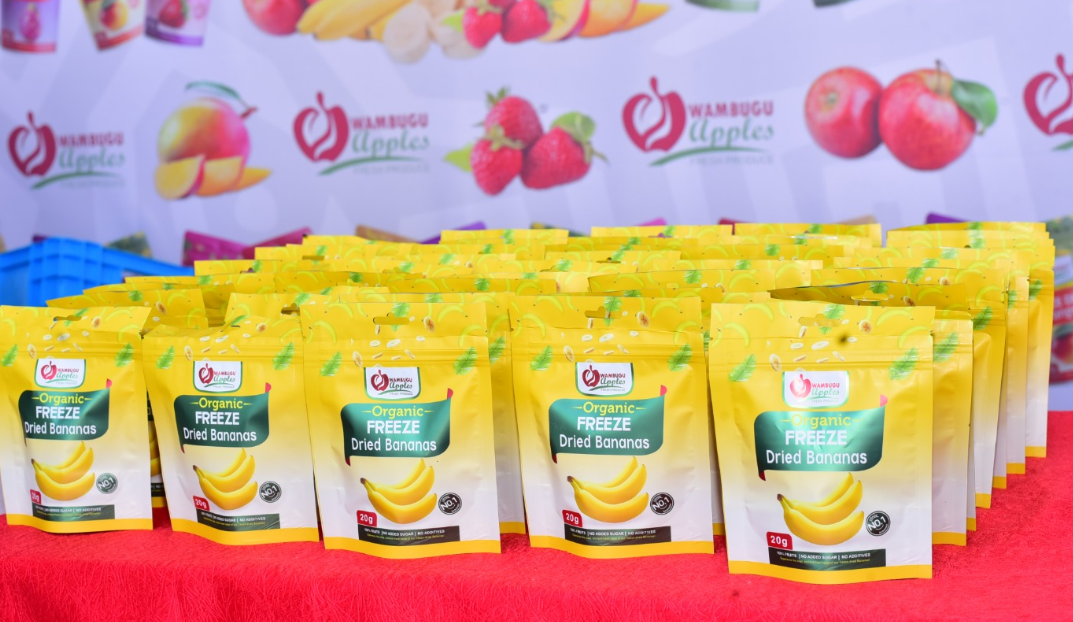
“This milestone marks our commitment to innovation and value addition in the horticulture sector,” said Mathew Njenga, Managing Director of Wambugu Apples. “Our goal is to unlock economic potential for farmers and contribute to a sustainable food system.”
At the product launch, attended by stakeholders from across the agricultural value chain, Christine Chesaro, Acting Director of the Horticultural Crops Directorate (HCD), praised the initiative as a timely response to one of the industry’s biggest challenges—post-harvest losses that can reach up to 40%.
“Fruits are highly perishable,” she said. “This technology provides a practical solution that preserves nutritional value and opens the door to products like fruit powders for yoghurt, baby food, and cooking.”
In 2024, Kenya exported fruits worth Ksh 32 billion—Ksh 23 billion from avocados and Ksh 9 billion from mangoes. But only 5% of horticultural produce makes it to export markets, with 50% of that being flowers. Chesaro sees freeze-drying as a way to increase fruit volumes in export markets while also improving access to quality food locally.
“There’s huge potential in other fruits, but volumes remain low,” she said. “This technology could open new doors. It’s also a way to link agriculture, nutrition, and innovation.”
She also made a passionate appeal to parents and youth: “The population is growing, jobs are scarce, but food is always in demand. Parents should support young people entering the sector.”
Njenga echoed her sentiments: “Farmers work hard, but without proper post-harvest management, much of their effort is wasted. Freeze-drying not only reduces this waste but creates shelf-stable, market-ready products.”
Wambugu Apples initially built its reputation on high-yielding apple varieties but has since expanded into other fruits. “Mangoes and dragon fruit are among our top-performing products,” Njenga noted.
He also challenged the status quo of reserving top-grade produce for export markets. “We want to change that narrative. Kenyan consumers deserve high-quality, nutritious food too.”
The freeze-drying process takes about 12 hours and is designed to be scalable. The company has invested about Ksh 200 million in specialized equipment and is now working with contracted farmers to ensure a reliable supply of fruits for processing.
“By building strong relationships with growers, we can reduce wastage and offer farmers stable incomes,” Njenga said, adding that the innovation is as much about technology as it is about economic empowerment.
He called on the government to provide support in the form of subsidies and policy incentives, citing successful farmer-centered value chains in countries like India. “Our ultimate goal is to feed the nation first, empower farmers, and create a circular economy around fruit production,” he said.
As Wambugu Apples scales its operations, the initiative is being hailed as a game-changer—bringing together sustainability, nutrition, innovation, and inclusive growth in one fruitful package.