

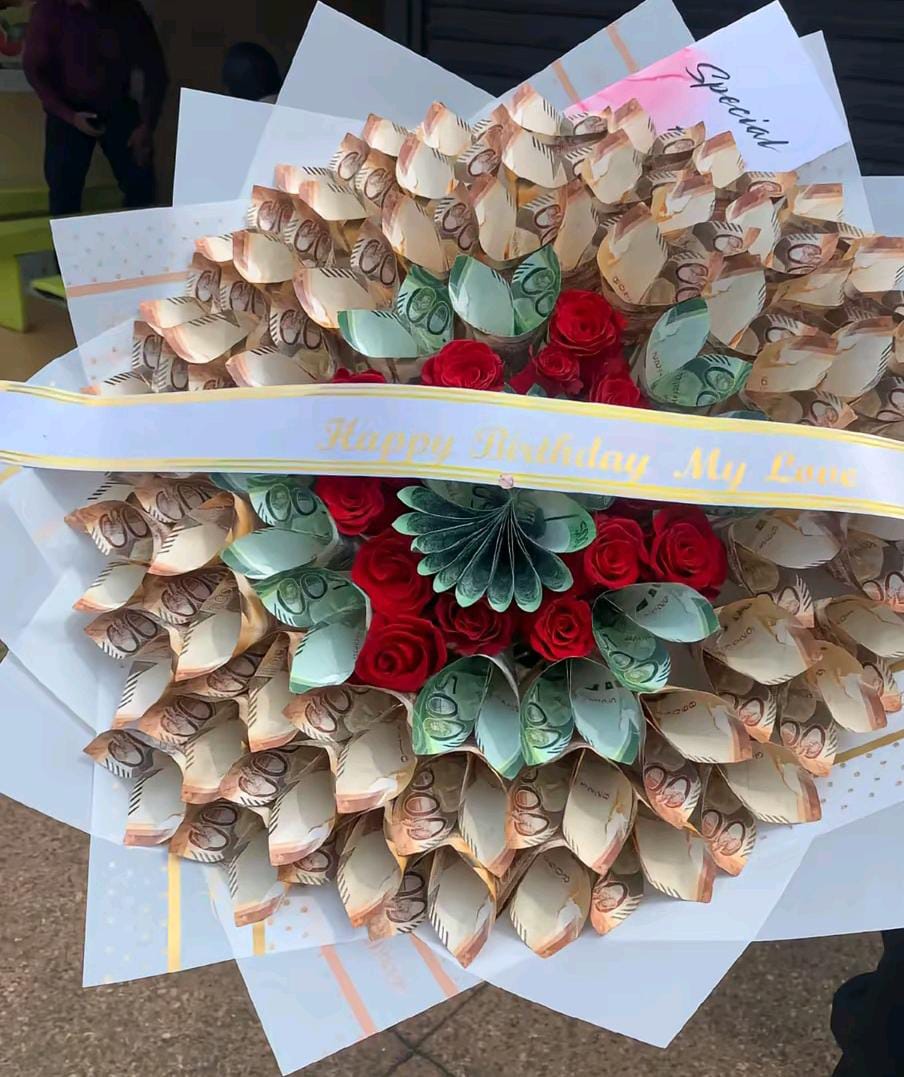

The Central Bank of Kenya (CBK) has issued a stern warning against the growing trend of creating “cash flower bouquets” and decorative displays using banknotes, declaring the practice illegal and punishable under Kenyan law.
In a statement released on February 2, 2026, the CBK cautioned that folding, pinning, stapling, gluing, taping, or otherwise altering currency amounts to defacement of banknotes, an offence under Section 367 of the Penal Code.
The warning comes amid a surge in popularity of money bouquets, particularly ahead of Valentine’s Day, where cash is increasingly being shaped into roses, fans, and ornamental displays for gifting.
Legal and financial implications
According to the CBK, any person found willfully defacing, mutilating, or impairing banknotes risks prosecution, with penalties including a fine of up to Sh2,000, a jail term of up to three months, or both.
Beyond legal consequences, the regulator emphasized that such practices impose unnecessary costs on the financial system.
“Techniques such as folding, rolling, gluing, or taping damage banknotes, rendering them unfit for circulation and forcing premature replacement at an avoidable cost to the public and the Central Bank,” the CBK said.
Operational risks to the banking system
The CBK noted that damaged banknotes disrupt the efficiency of cash-handling infrastructure, including ATM machines, currency counters, and sorting equipment, leading to higher operational costs and service interruptions across the banking sector.
Banks are often forced to withdraw and replace damaged notes earlier than planned, costs that ultimately ripple through the economy.
Cash gifts still allowed — with conditions
The regulator clarified that it does not object to cash being given as a gift, but stressed that banknotes must remain intact, unaltered, and undamaged.
As an alternative, the CBK encouraged Kenyans to use envelopes, vouchers, gift cards, or digital payment platforms when gifting money, rather than decorative methods that compromise the integrity of currency.
A broader message on currency integrity
The warning underscores the CBK’s broader mandate to safeguard the quality, usability, and lifespan of Kenya’s currency. With the cost of printing and replacing banknotes borne by taxpayers, the Bank reiterated that protecting currency is a shared public responsibility.
As Valentine’s Day approaches, the CBK’s message is clear: romance should not come at the expense of the law or the stability of the financial system.