


by Anita Nkirote/anita.nkirote@hortinews.co.ke
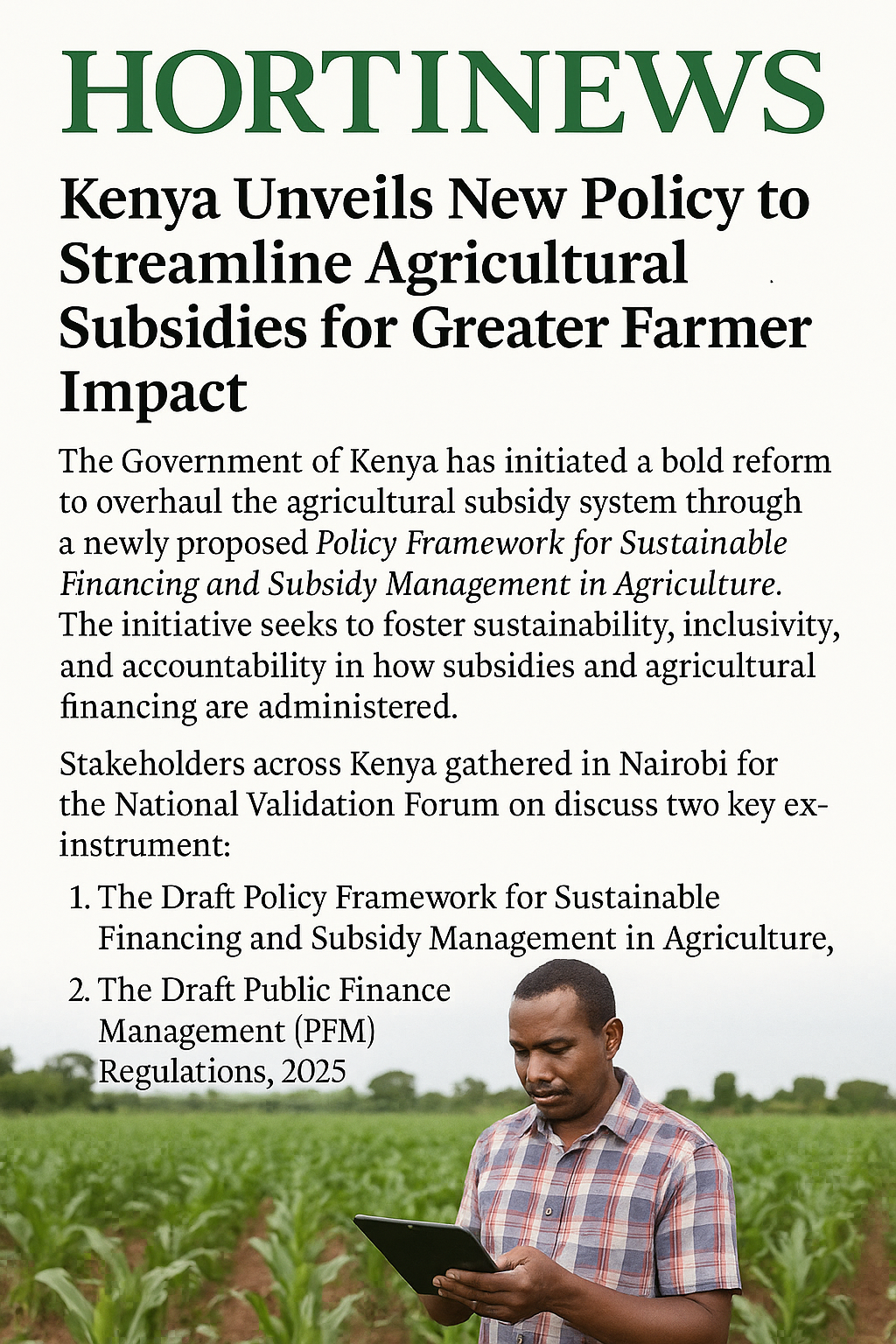
The Government of Kenya has initiated a bold reform to overhaul the agricultural subsidy system through a newly proposed Policy Framework for Sustainable Financing and Subsidy Management in Agriculture. The initiative seeks to foster sustainability, inclusivity, and accountability in how subsidies and agricultural financing are administered.
This policy shift was unveiled at the National Validation Forum held in Nairobi, where key players across Kenya’s agricultural value chain convened to discuss two major instruments: the Draft Policy Framework for Sustainable Financing and Subsidy Management in Agriculture, and the Draft Public Finance Management (PFM) Regulations, 2025.
For years, Kenya’s subsidy programs have been criticized for lacking a coherent policy direction, with benefits often diverted to intermediaries instead of reaching the intended smallholder farmers. The new framework proposes replacing blanket subsidies with targeted, needs-based support, harnessing digital platforms such as e-vouchers and decentralized county-level distribution systems to ensure direct access by farmers.
“Historically, financing and subsidy support in Kenya have lacked a clear and coherent policy framework,” noted a stakeholder at the forum. “As a result, many smallholder farmers and value chain actors have been excluded from these services, limiting sectoral growth and access to modern inputs.” according to Collins Marangu , Agriculture Secretary
The new policy also recognizes that agricultural subsidies must go beyond inputs like fertilizer and seeds. It proposes integrated solutions that include agricultural insurance, mechanization, and market linkage support to improve overall productivity and profitability.
A critical element of the proposed changes is aligning subsidies with market access. “It’s not enough to offer inputs,” explained Peter Owoko, head of policy unit in the mistry. “We must ensure farmers have access to structured markets so that the benefits of subsidies translate to income and growth. That alignment between subsidies and marketing is a central focus of this new framework.”
The reform comes at a critical time when Kenya is under pressure to meet the Malabo Declaration targets on agricultural transformation, food security, and resilience. Experts believe that more efficient and transparent subsidy management will unlock access to inputs and financial services for marginalized farmers, stimulate value chain growth, and improve national food security.
The draft documents are currently under review following feedback from the forum. Once finalized and adopted, implementation is expected to roll out progressively, starting with pilot counties using the digital e-voucher system.
For farmers and sector stakeholders, the success of this policy will depend on continued collaboration, capacity building at the county level, and robust monitoring mechanisms to ensure resources reach the intended beneficiaries.