

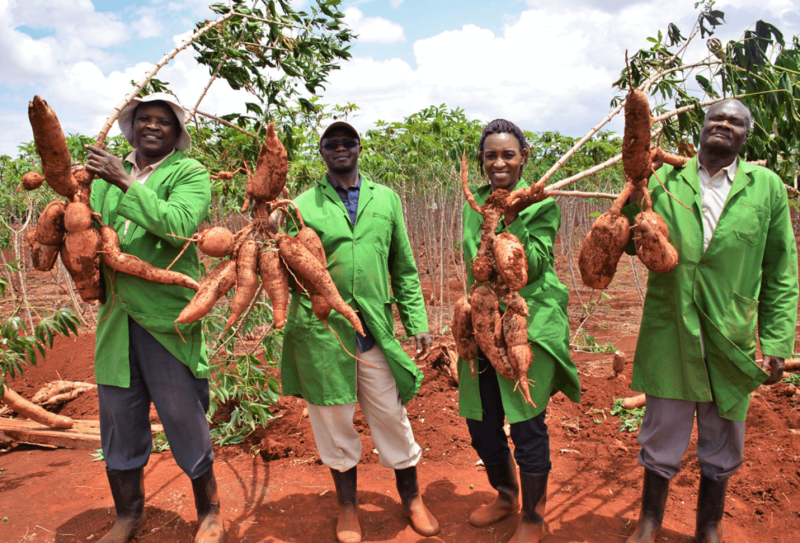
Only BT cotton approved so far, with BT maize, cassava, and potatoes under review
The National Biosafety Authority (NBA) has reaffirmed that all Genetically Modified Organism (GMO) products in Kenya undergo strict safety checks before reaching farmers or consumers.
During a recent tour of the Busia One-Stop Border Post, NBA Acting CEO Nehemiah Ng’etich emphasized that Kenya’s GMO oversight system is based on globally recognized standards. “We follow a thorough, science-based risk assessment process under the Biosafety Act to ensure any GMO product approved for use is safe—just as safe as its non-GMO counterpart,” he told stakeholders at the border.
Currently, only BT cotton has been approved for cultivation in Kenya since 2020. According to Ng’etich, BT maize, cassava, and a GMO potato variety are under advanced review and could soon be accessible to farmers, pending final regulatory steps.
“These crops are going through final safety evaluations. Once approved, they will offer farmers better resistance to pests and climate-related stress, boosting productivity,” said Ng’etich.
He also raised concern over growing misinformation about GMOs, with some people wrongly assuming that any fast-growing or big crop is genetically modified. “Not everything is a GMO. Identification requires testing. We are rolling out a countrywide awareness campaign to educate the public and curb myths,” he added.
NBA’s Acting Director of Biosafety Research and Compliance, Josphat Muchiri, echoed these sentiments, emphasizing that Kenya’s biosafety system is anchored in international agreements like the Cartagena Protocol, alongside local policies and laws.
“Our system is robust and farmer-focused. Nothing is released into the environment or food chain until it passes multiple layers of safety checks,” said Muchiri.
Asteria Angolo, also from the Authority, reassured that NBA is vigilant about keeping unverified GMO products off the market. “Our duty is to ensure that only safe and approved GMOs are available to farmers and consumers. Safety is not negotiable,” she noted.
On the trade front, Florence Atieno, chairperson of the Busia Women Cross Border Traders Association, urged NBA to align Kenya’s biosafety policies with those of neighboring countries. “Harmonizing policies across borders is key for smooth trade. Many of us trade agricultural goods daily and need clarity on what’s allowed. More education will help us comply and thrive,” she said.